Story ideas
How do you help a child with a worried brain that won't turn off?
How to help a child quiet an anxious, busy brain by naming worries out loud, giving them a place to go like a worry jar, and teaching a calming breath, with an example story.
The short answer
Name the worries out loud so they shrink, give them a place to go like a worry jar, and teach a calming tool like slow breathing so worries feel manageable instead of endless. Listen without rushing to fix, and practice the calming tools during calm moments. If worries are frequent, intense, or interfering with daily life, talk with your pediatrician. A story where a character just like them learns to quiet their worries makes the tools stick.
Key takeaways
- A worried brain often means a sensitive, thoughtful brain working overtime.
- You may hear a stream of "what ifs," especially at bedtime.
- Name the worries, give them a place to go, and teach a calming tool.
- A story where your child learns to quiet their worries makes those tools stick.
How do you help a child with a worried brain that won't turn off?
Name the worries out loud, give them a place to go (like a worry jar or worry time), and teach a calming tool like slow breathing, so worries feel manageable instead of endless. If your child has a worried brain that won't turn off, anxiety in children is common, and a worried brain is often a thoughtful brain working overtime. Children can learn to gently quiet those worries with the right tools, and a story is a wonderful way to hand them over.
A worried child can't simply be told to stop worrying, the brain doesn't work that way. A story gives the worries structure and a way out.
Why does a story work when worries pile up?
A story gives worries structure and a way out. When a child watches a hero name their worries, set them down, and feel their mind quiet, they learn that worries are manageable and that they have tools to calm them. Give the hero your child's name and face and the calm becomes theirs.
What does a good worried-brain story look like?
The names and characters are invented for this example. In a real personalized book, the hero is your own child.
1. A hero with a busy brain
Omar's brain was always busy, especially at bedtime. Worries would pop up one after another, what if this, what if that, and they wouldn't turn off. He was a thoughtful, caring kid, and his brain just worried a lot.
2. A worry he can name
The more Omar tried to stop worrying, the more the worries seemed to multiply. They swirled around in his head and made it hard to relax or fall asleep. He didn't know how to make them quiet down.
3. A hero who looks just like him
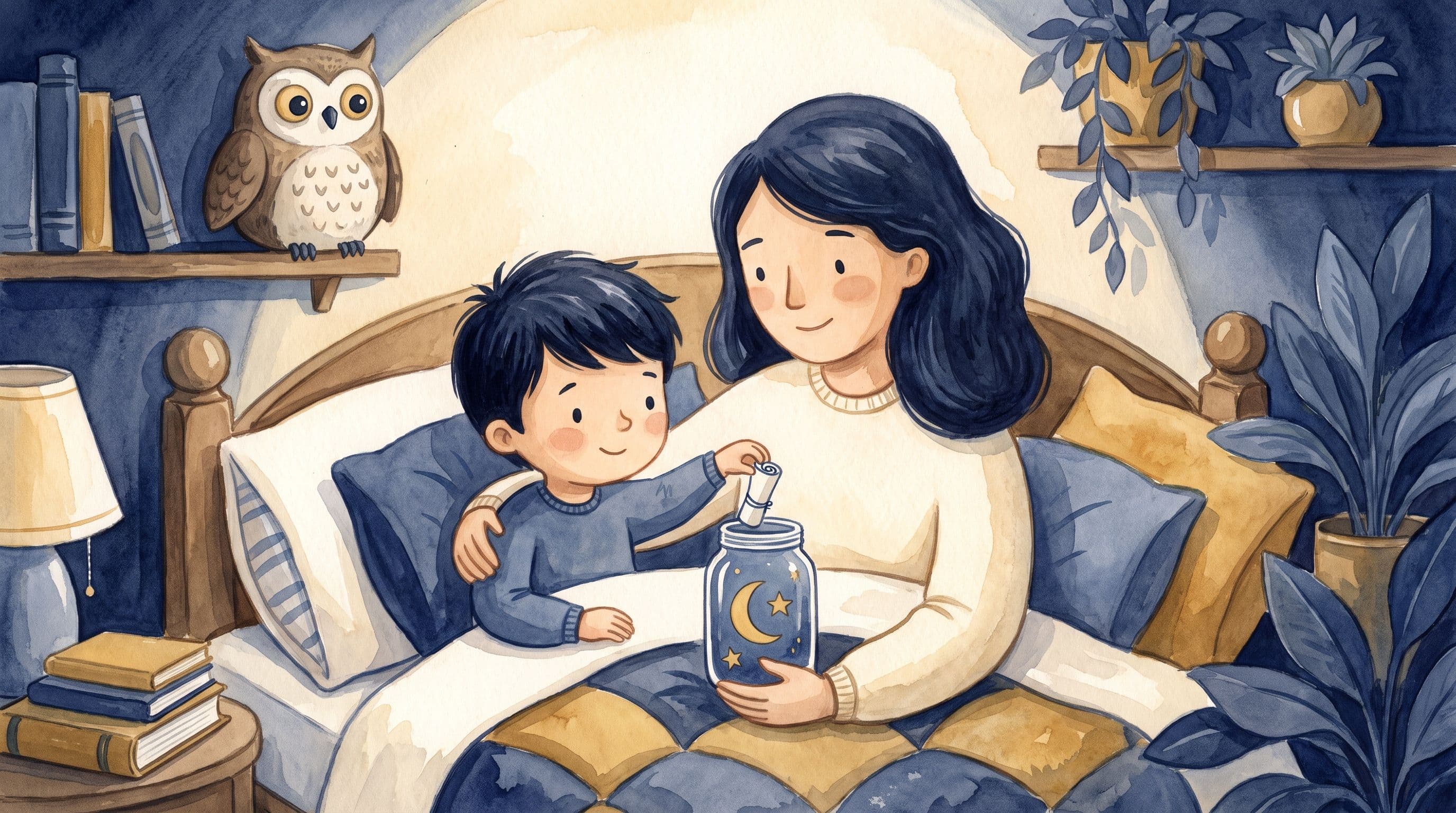
One evening his dad read him a new book with a boy on the cover who had Omar's dark hair, tucking a worry into a special jar, and Omar's own name across the top. In the story, that Omar had a worried brain too, and his wise stuffed owl Nova gave him tools. First, worries get smaller when you say them out loud, so tell a grown-up your worries. Second, worries need a place to go: put them in a Worry Jar at bedtime, writing or drawing each worry and popping it in the jar to set it down until morning. Third, when the busy feeling comes, do Slow Owl Breaths, in for four, out for four, to calm your body. Story-Omar named his worries, put them in the jar, and did his Owl Breaths, and his busy brain finally quieted enough to rest.
4. He tries, and finds calm
Story-Omar's tools helped his worried brain settle. Real Omar wanted them too. He and his dad made a Worry Jar, and at bedtime Omar named his worries out loud, drew the big ones, and popped them in the jar to deal with tomorrow. Then he did Slow Owl Breaths. His brain was still busy, but quieter, quiet enough to fall asleep. Naming the worries and setting them down really did make them smaller.
5. He comes back to the book
Omar asked for the book at bedtime, and Nova's tools became his nightly routine. The worries didn't vanish, but they stopped running the show, because Omar had learned that he could name them, set them down, and calm his body when his brain got too busy.
How should you use a story like this at home?
- Invite your child to name worries out loud, and listen without rushing to fix.
- Create a Worry Jar or a short daily "worry time" so worries have a container.
- Practice slow breathing together during calm moments.
- If worries are frequent, intense, or interfering with daily life, talk with your pediatrician, since some kids benefit from extra support.
When is childhood worry a bigger concern?
Occasional worry is normal, but if anxiety is frequent, intense, or interfering with sleep, school, or daily life, it's worth talking with a pediatrician or a child mental-health professional. The American Academy of Pediatrics suggests finding out what's worrying your child, spending one-on-one time together, and using calming strategies like slow exhales and grounding through the five senses — and notes that cognitive behavioral therapy can help children whose anxiety gets in the way of everyday activities (Help Your Child Manage Anxiety: Tips for Home & School).
Keep reading: a worried brain often shows up as bad dreams at night — see how this approach helps a child with recurring nightmares.