Story ideas
How do you help a child overwhelmed by loud noises?
How to help a child overwhelmed by loud noises like the vacuum or hand dryer by warning them, offering ear protection, and reminding them sounds end, with an example story.
The short answer
Warn your child before a loud sound when you can, give them a tool to soften it like soft ear protection, and remind them the sound has an ending they can count toward. Validate that it really does feel that loud instead of saying it's no big deal. A story where a character just like them uses a simple plan to handle loud noises helps them feel in control instead of ambushed.
Key takeaways
- The vacuum, hand dryer, blender, and fireworks are sudden and can feel physically overwhelming.
- "It's not that loud" makes a noise-sensitive child feel unheard — to them, it really is.
- Warn them, offer ear protection, and remind them every loud sound has an ending.
- A story where your child handles the sound with a plan turns an ambush into something manageable.
How do you help a child overwhelmed by loud noises?
Warn them before a loud sound, give them a tool to soften it, and remind them the sound will end. The everyday world can feel full of ambushes to a sensitive kid — the vacuum, the hand dryer, a blender, fireworks, an automatic toilet. These sounds are sudden and loud, and the aim isn't to silence the world. It's to make the loud moments feel predictable and survivable instead of like an attack.
Telling a noise-sensitive child "it's not that loud" only makes them feel unheard, because to them it really is. Validate the feeling first, then hand over a plan.
Why does a story work when "it's not that loud" doesn't?
A story validates the feeling and hands over a plan at the same time. When a child watches a hero handle the vacuum or hand dryer with a simple tool, the sound stops being something that happens to them and becomes something they can prepare for. Put your child's name and face on that hero and the plan becomes theirs.
What does a good loud-noise story look like?
The names and characters are invented for this example. In a real personalized book, the hero is your own child.
1. A hero with something big to learn
Lily noticed everything, especially sounds. Most of the time that was a gift. But the vacuum, the hand dryer, and the fireworks on summer nights were too big, too sudden, and too loud, and they turned a good day upside down in an instant.
2. A worry she can name
When a loud sound hit without warning, Lily's whole body reacted. Her hands flew to her ears, her heart raced, and sometimes she cried. The worst part was never knowing when the next big sound was coming. The world felt full of ambushes.
3. A hero who looks just like her
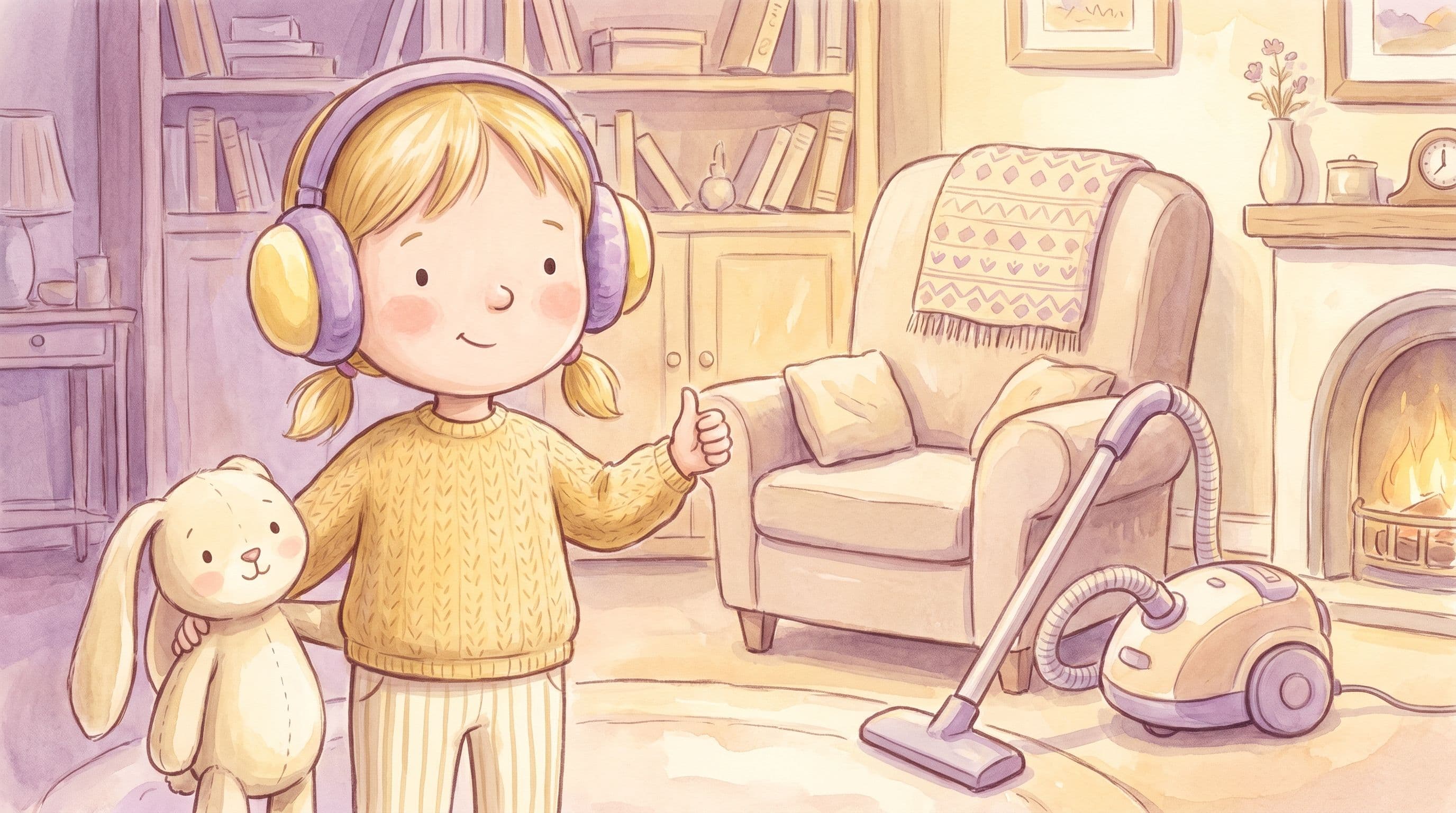
One evening Mom read her a new book with a girl on the cover who had Lily's blonde pigtails and Lily's own name across the top. In the story, that Lily got overwhelmed too, until her plush rabbit Bramble, who had the biggest ears around, taught her the Big-Ear Plan: get a warning before a loud sound when you can, put on your soft ear muffs or cup your hands, and remember that every loud sound has an ending, so you can count your way to the quiet.
4. She tries, and feels proud
Story-Lily used the Big-Ear Plan on the vacuum, and with a warning, her ear muffs, and the knowledge that it would end, she stayed calm all the way through. Real Lily wanted her own plan. Before Mom vacuumed, she gave Lily a countdown. Lily put on her ear muffs, hugged a plush rabbit, and reminded herself, "It has an ending." The vacuum roared, Lily counted, and then it stopped. "I had a plan and it worked."
5. She won't stop asking for the book
Lily asked for the book often and kept her ear muffs handy for hand dryers and fireworks. She taught the Big-Ear Plan to a friend who covered his ears at assemblies. The loud world didn't get quieter, but it stopped ambushing her, because now she had a warning, a tool, and the certainty that every loud thing ends.
How should you use a story like this at home?
- Give a heads-up before predictable loud sounds like the vacuum or blender.
- Keep soft ear protection available and let your child put it on themselves.
- Name the ending: "It will be loud for a little bit, then it stops."
- If loud-noise distress is frequent and intense, mention it to your pediatrician, since some kids benefit from extra support.
Why is my child so scared of loud noises?
Sudden, loud sounds can feel physically overwhelming to young children, especially sensory-sensitive ones, and having a warning and a tool usually helps them cope. As with other childhood fears, the American Academy of Pediatrics suggests responding with sympathy and coping strategies rather than dismissal, and checking in with your pediatrician if a fear is intense or persistent enough to interfere with daily life (Fears & Phobias in Children: How Parents Can Help).
Keep reading: the loudest, most sudden sound of all is thunder — see how the same approach helps a child afraid of thunderstorms.