Story ideas
How do you help a child who is afraid of thunderstorms?
How to calm a child's fear of thunderstorms by explaining what thunder is and giving them a simple tool to use in the moment, with a full example story.
The short answer
Explain plainly what thunder actually is and give your child something to do with the sound, like counting the seconds between the flash and the boom to hear the storm moving away. Build a cozy storm spot, stay calm yourself, and talk it through before the next storm rather than during it. A story where a character just like them stays cozy and curious makes that tool stick.
Key takeaways
- Thunder is loud, sudden, and impossible to control — exactly what makes it scary.
- "It's just thunder" is true but gives a scared child nothing to do in the moment.
- Explain the sound and give a tool, like counting the gap between flash and boom.
- A story where your child stays cozy and curious makes that tool stick.
How do you help a child who is afraid of thunderstorms?
Explain what thunder actually is and give your child something to do with the sound. Thunder is loud, sudden, and impossible to control, which is exactly what makes it frightening. Storms will keep coming, so the goal isn't to avoid them. It's to give your child a way to feel safe, and even a little curious, when the sky gets loud.
"It's just thunder" is true, but it doesn't hand a scared child anything to hold onto in the moment. A simple, concrete tool does.
Why does a story work when "it's just thunder" doesn't?
When a child watches a hero understand the storm and use a simple trick to feel safe, the thunder changes from a threat into something they can explain and even measure. Put your child's name and face on that hero and the calm becomes theirs.
What does a good thunderstorm story look like?
The names and characters are invented for this example. In a real personalized book, the hero is your own child.
1. A hero with something big to learn
Chloe was brave about most things, but the second the sky rumbled, all that bravery vanished. She loved rainy days right up until the thunder started, and then she wanted to be as small and hidden as possible.
2. A worry she can name
The thunder was so loud and so sudden it made her whole body jump. She never knew when the next boom was coming, and not knowing was the worst part. So she'd hide, cover her ears, and wait miserably for the storm to be over.
3. A hero who looks just like her
One stormy evening, Mom read her a new book with a girl on the cover who had Chloe's auburn curls and Chloe's own name across the top. In the story, that Chloe hid from storms too, until her plush elephant Pip explained the secret: thunder is just the sound clouds make, and it can't touch you inside. Pip taught her the Thunder Count: when you see a flash, count slowly until the boom. The bigger the number, the farther away the storm.
4. She tries, and feels proud
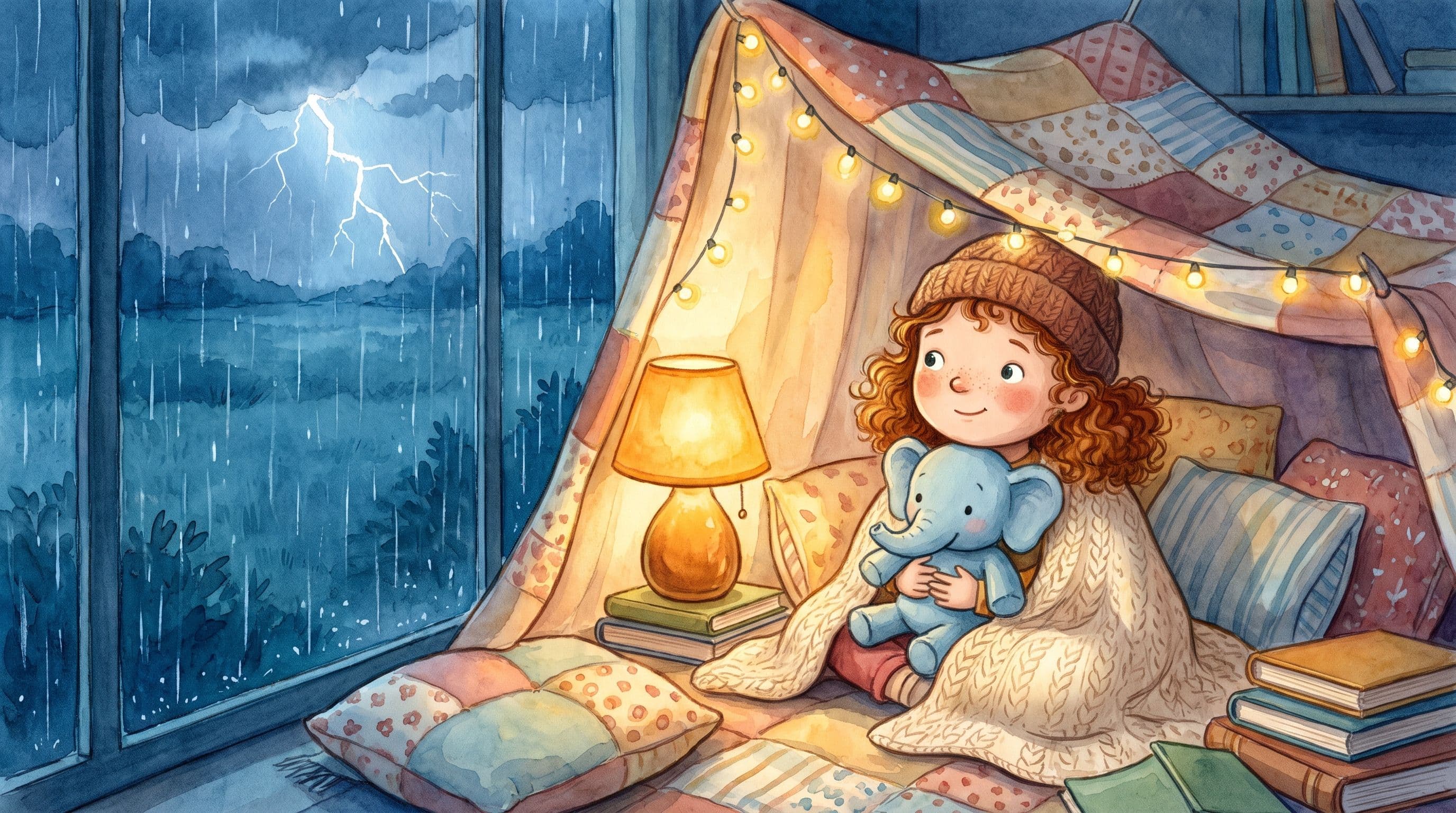
Story-Chloe built a cozy fort and did the Thunder Count, and the storm turned into something she could measure instead of something that jumped at her. Real Chloe wanted to try. During the next storm she made a blanket fort, hugged a plush elephant, and counted after each flash. "One, two, three, four... boom!" The numbers got bigger. "It's leaving," she reported, delighted to be the one keeping track.
5. She won't stop asking for the book
Chloe asked for the book whenever clouds gathered and did the Thunder Count every storm after. She explained thunder to her little brother like an expert. The rumbles didn't vanish, but they stopped being scary, because now she had a job to do and a plan to feel safe.
How should you use a story like this at home?
- Explain thunder simply and honestly, before the next storm rather than during it.
- Build a cozy storm spot — a fort or a favorite blanket — so storms have a safe base.
- Do the Thunder Count together so it feels like a shared game, not a test.
- Stay calm yourself. Kids read your body language during storms more than your words.
Why is my child so scared of thunder?
Thunder is loud, sudden, and unpredictable, which makes it one of the most common childhood fears. The American Academy of Pediatrics advises meeting these fears with sympathy rather than dismissal and, when your child is calm, teaching simple coping skills like slow breathing and thinking of a safe place, while praising brave behavior — most such fears fade with time and support (Fears & Phobias in Children: How Parents Can Help).
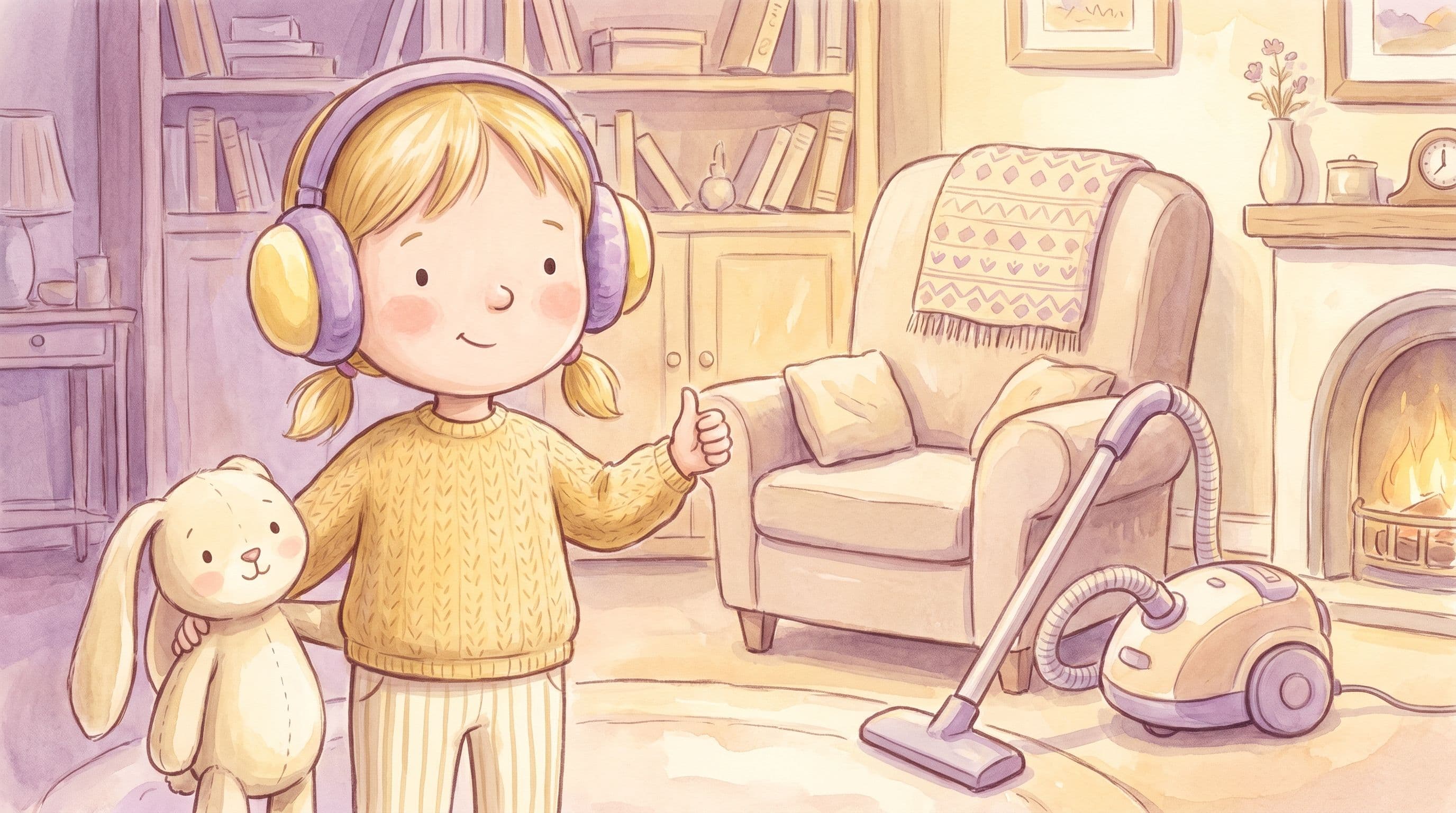
Keep reading: thunder is one loud, startling thing among many — see how the same approach helps a child afraid of loud noises like the vacuum and hand dryers.