Story ideas
How do you teach a child to give a real apology after being mean?
How to help a child who was unkind take responsibility and make a genuine repair, by separating the deed from the child and guiding a real, three-part apology, with a story.
The short answer
Separate the deed from the child, you did an unkind thing, you are not a bad kid, help them see how the other person felt, and guide a real apology: say what you did, that you're sorry, and how you'll do better. Praise the repair so making things right feels good. A story where a character just like them owns a mistake and makes it right teaches this far better than a forced "sorry."
Key takeaways
- Every kid has moments of being unkind, grabbing, excluding, saying something that stings.
- What matters most is what comes next: understanding the impact and making a repair.
- Separate the deed from the child, build empathy, and guide a real, three-part apology.
- A story where your child repairs a mistake makes apologizing feel doable.
How do you teach a child to give a real apology after being mean?
Separate the deed from the child (you did an unkind thing, you are not a bad kid), help them see how the other person felt, and guide a real apology: say what you did, that you're sorry, and how you'll do better. When your child was the one who was mean, what matters most is helping them take responsibility and make a genuine repair. A child who learns to give a real apology grows into a kinder, more accountable friend.
A forced, mumbled "sorry" teaches a child to end a conflict, not to understand it. A story teaches the whole repair.
Why does a story work better than a forced "sorry"?
A story teaches that a good apology has real parts, and that making a mistake doesn't make you bad. When a child watches a hero realize they hurt someone, feel genuine regret, and make it right, they learn the whole repair. Give the hero your child's name and face and the accountability becomes theirs.
What does a good apology story look like?
The names and characters are invented for this example. In a real personalized book, the hero is your own child.
1. A hero with something to face
Elena had a rough moment at school. She wanted a turn, got frustrated, and said something unkind to a friend, and the friend's face fell. Afterward, Elena felt a heavy, twisty feeling in her stomach. She knew she'd done something wrong.
2. A worry she can name
Part of Elena worried that being mean made her a bad kid. Part of her didn't know how to fix it. The twisty feeling made her want to hide from it rather than face her friend.
3. A hero who looks just like her
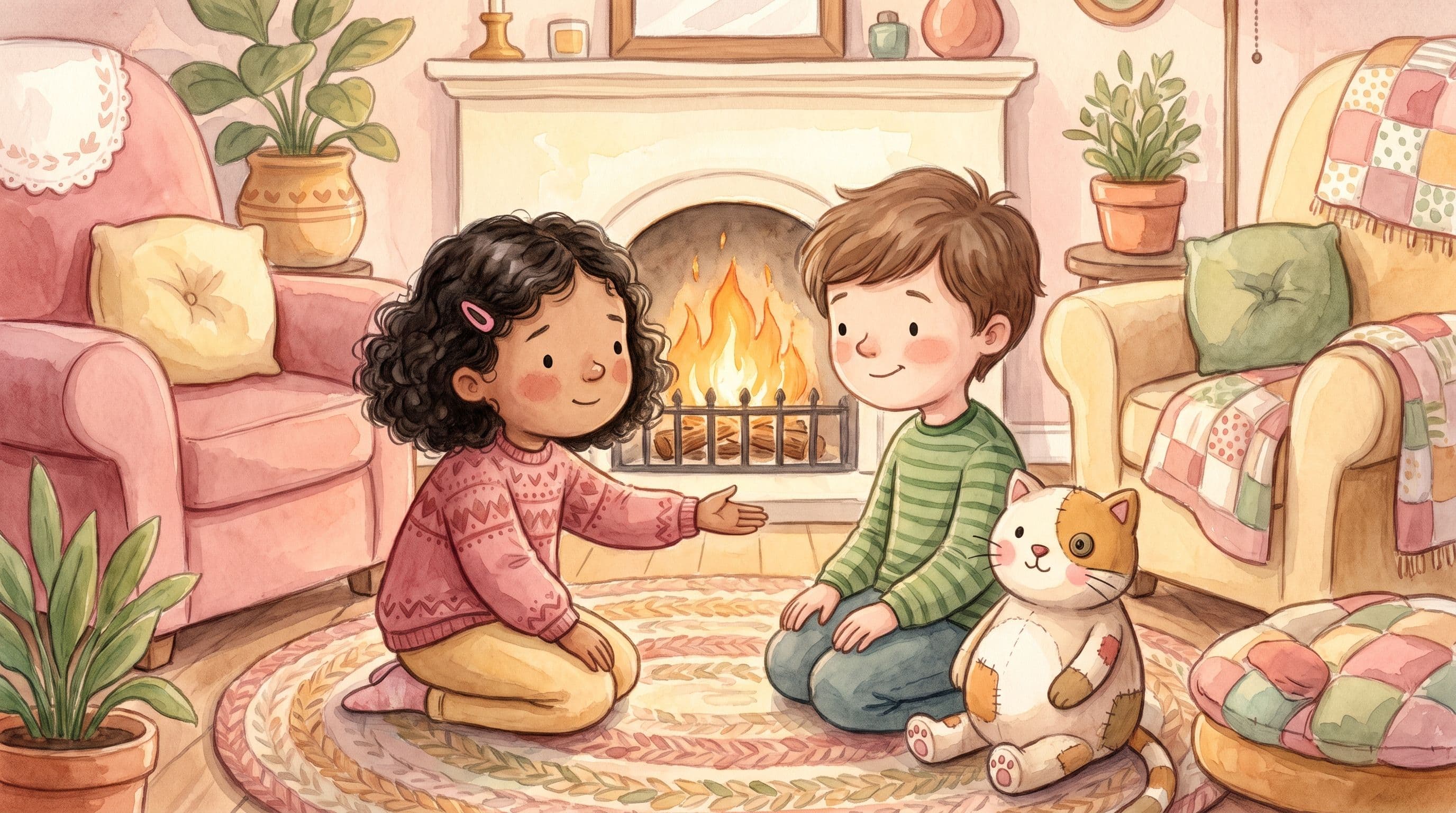
One evening her mom read her a new book with a girl on the cover who had Elena's dark hair, gently apologizing to a friend, and Elena's own name across the top. In the story, that Elena had been unkind too, and her stuffed cat Pepper helped her sort it out. Doing an unkind thing doesn't make you a bad kid, Pepper said, it makes you a kid who made a mistake, and mistakes can be repaired. Pepper taught her the Real Apology: say what you did ("I said something mean"), say you're sorry and mean it, and say how you'll do better ("I'll ask nicely for a turn next time"). Story-Elena gave her friend a Real Apology, and her friend forgave her, and the twisty feeling melted away.
4. She tries, and makes it right
Story-Elena repaired the friendship and felt lighter and prouder. Real Elena wanted to make it right too. The next day she went to her friend, took a breath, and gave a Real Apology: "I'm sorry I said that mean thing. It wasn't kind, and next time I'll ask for a turn nicely." Her friend smiled and said okay, and they played together again. The heavy feeling lifted. Elena had fixed it, all by herself.
5. She comes back to the book
Elena asked for the book again, and Pepper's Real Apology became something she could reach for whenever she messed up. She grew into a kinder friend, because she'd learned that everyone has unkind moments, and knowing how to make things right is one of the bravest, most grown-up skills there is.
How should you use a story like this at home?
- Make it clear a mistake doesn't make your child bad, while still holding the behavior accountable.
- Help them see the other person's feelings.
- Guide a real apology with all three parts rather than a forced "sorry."
- Praise the repair, so making things right feels good.
What do you do when your child was mean to a friend?
Address the behavior calmly, help them understand the impact, and support them in making a genuine repair, while reassuring them they're still a good kid who made a mistake. The American Academy of Pediatrics suggests teaching children to stay calm, put their feelings into words, and listen to the other person, and notes that when you model recovering from your own mistakes — cooling down, apologizing, and explaining how you'll do better — you give your child a template for doing the same (Everybody Gets Mad: Helping Your Child Cope with Conflict).
Keep reading: kindness shows up in the small moments too, like sharing — see how this approach helps a child sharing a favorite toy.