Story ideas
How do you help a child who broke a bone and needs a cast?
How to help a child who broke a bone and needs a cast by reframing it as a protective shield and making it special, with a full example story.
The short answer
Explain that the cast is a shield protecting the bone while it heals, and make it feel special by picking a bright color, collecting friends' signatures, and marking a countdown to the day it comes off. Follow the doctor's care instructions and call with any concerns about pain or swelling. A story where a character just like them wears their cast proudly turns worry into a badge of honor.
Key takeaways
- The pain, the x-ray, the strange hard cast, and weeks of doing things differently all feel scary.
- Kids often worry the cast will hurt, that they'll never do their favorite things, or that everyone will stare.
- Reframe the cast as a shield that lets a strong body heal — and make it special.
- A story where your child wears their cast proudly turns worry into a badge of honor.
How do you help a child who broke a bone and needs a cast?
Explain that the cast is a shield protecting the bone while it heals, and make it feel special. The whole experience can feel scary and unfamiliar: the pain, the x-ray, the strange hard cast, the weeks of doing things differently. Kids often worry the cast will hurt, that they'll never do their favorite things again, or that everyone will stare. A little reframing turns the cast into what it really is — a temporary shield.
A child in a new cast has a lot of unknowns, and "you'll be fine" doesn't answer them. Giving the cast a positive, protective meaning does.
Why does a story work when reassurance alone doesn't?
A story answers the unknowns by showing them resolved. When a child watches a hero learn the cast is a shield, get it signed by friends, and count down to the day it comes off, the cast stops being scary and starts being kind of cool. Give the hero your child's name and face and the bravery becomes theirs.
What does a good cast story look like?
The names and characters are invented for this example. In a real personalized book, the hero is your own child.
1. A hero with something big to learn
Max fell off the monkey bars and broke his arm. After the x-ray and the doctor, he came home with a big hard cast, and a whole list of worries about what came next.
2. A worry he can name
Would the cast hurt? Would he ever climb again? Would everyone at school stare at his weird arm? The cast felt heavy and strange, and Max wasn't sure how to be himself with it on.
3. A hero who looks just like him
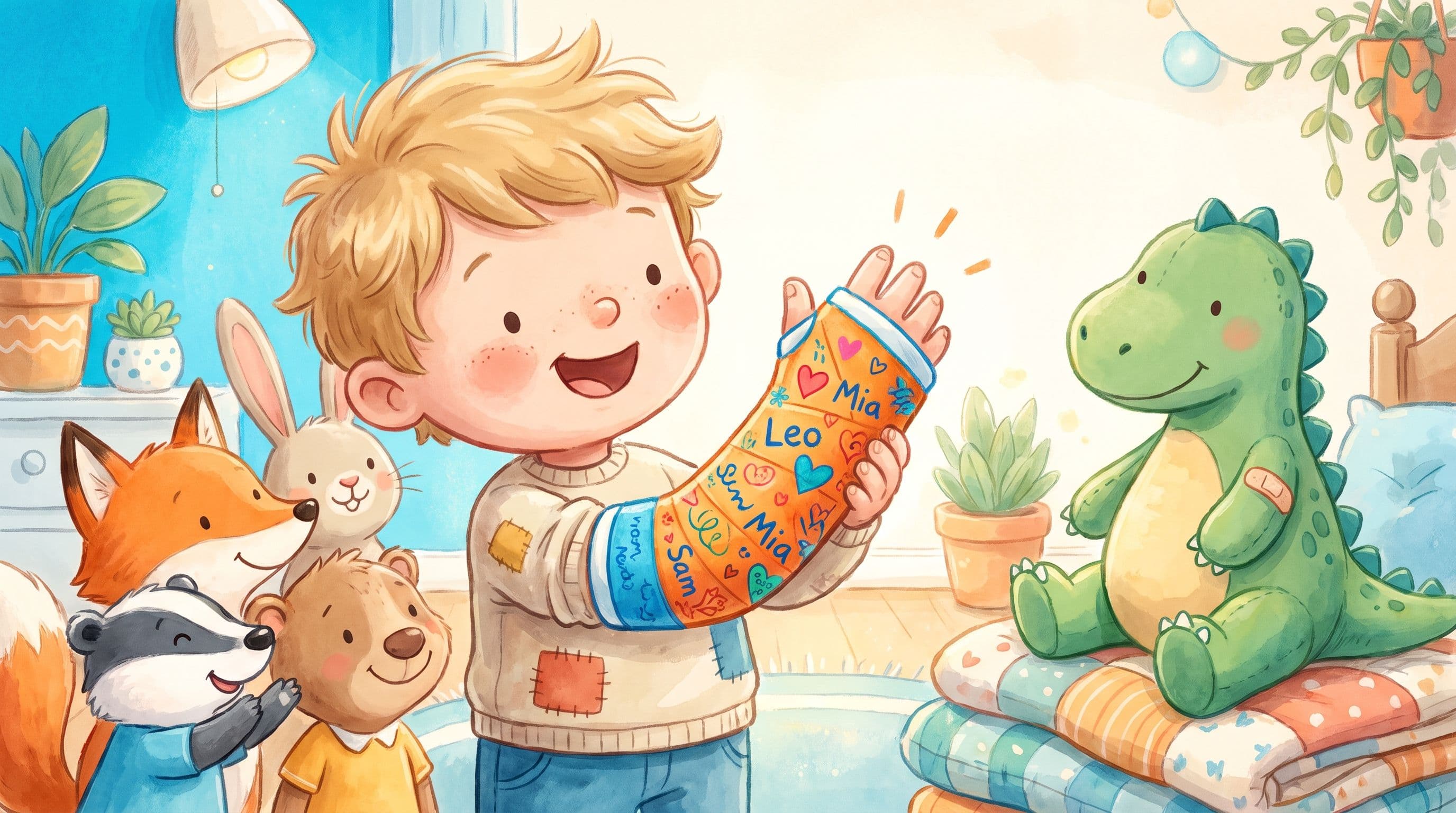
That night Dad read him a new book with a boy on the cover who had Max's blond hair, a cast, and Max's own name across the top. In the story, that Max had a cast too, until his stuffed dinosaur Rex helped him see it differently. The cast wasn't a punishment. It was a Superhero Shield, holding the bone perfectly still so his strong body could knit itself back together. Rex showed him how to make it special: pick a bright color, let friends sign it with doodles and get-well notes, and mark a countdown to the day the doctor takes it off.
4. He tries, and feels proud
Story-Max decorated his shield and wore it like the badge of a brave kid who was healing. Real Max wanted his cast to be a Superhero Shield too. He chose a bright blue one, and by the end of the week it was covered in his friends' names and dinosaur doodles. When a kid asked about it, Max grinned. "It's my shield. My arm is healing underneath." He counted down the days on the calendar, proud of every one.
5. He won't stop asking for the book
Max asked for the book throughout the healing time and showed off his shield to anyone curious. He cheered up another kid who'd just gotten a cast. The worry melted away, because the cast wasn't a scary thing that happened to him. It was proof he was strong and healing.
How should you use a story like this at home?
- Explain simply that the cast protects the bone while it heals.
- Let your child pick the color and gather signatures to make it feel special.
- Mark a countdown to the day it comes off so there's a clear, hopeful endpoint.
- Follow the doctor's care instructions, and call them with any questions about pain, swelling, or the cast itself.
How do you help a child cope with a cast?
Reframe the cast as a shield, make it special, and count down to removal day. It reassures kids to know how well they heal: the American Academy of Pediatrics notes that children's bones are still growing and have tremendous potential to repair themselves, and that many fractures need only to be kept still with a molded cast or splint — though your doctor should follow any growth-plate injury carefully and guide the cast care (Broken Bones (Fractures) in Children: Signs, Treatment & Recovery).
Keep reading: a cast usually comes with a shot or two along the way — see how this approach helps a child nervous about getting a shot at the doctor.