Story ideas
How do you help a child get dressed by themselves?
How to help a child get dressed by themselves and end the morning standoff, by breaking dressing into small winnable steps, with a full example story.
The short answer
Break dressing into a small, same-every-time sequence and let your child own one step at a time, starting with the easiest item. Lay clothes out the night before, build in a few extra minutes so mornings aren't a race, and let backwards shirts slide. A story where a character just like them learns the steps and finally nails the tricky shirt turns a frustrating chore into a game they want to win.
Key takeaways
- Getting dressed is a lot of steps for small hands; they need it broken down.
- Let your child own one step at a time, starting with the easiest item.
- Build in extra minutes so the morning isn't a race they'll lose.
- A story where your child masters the tricky shirt turns "you do it" into "I did it."
How do you help a child get dressed by themselves?
Break it into a small, consistent sequence and let your child own one step at a time. Getting dressed is a surprising amount of work for small hands: shirts get stuck, tags itch, both feet end up in one pant leg, and the whole thing collapses into "you do it." They usually want the independence. They just need the steps small enough to win.
Rushed mornings work against that, because a rushed parent takes over to save time, which quietly teaches the child that dressing is a grown-up job. Slow the moment down, hand the steps back, and let them keep the wins.
Why does a story work when rushing doesn't?
A story hands the steps back in a form a child can follow. When they watch a hero master the same tricky shirt, the task stops feeling impossible and starts feeling like a sequence they can learn. Give the hero your child's name and face and it becomes their own how-to.
What does a good getting-dressed story look like?
The names and characters are invented for this example. In a real personalized book, the hero is your own child.
1. A hero with something big to learn
Noah wanted to be in charge of himself. He picked his own snacks and buckled his own seatbelt. But when it came to getting dressed, the shirt always won. His arm would get lost, his head would get stuck, and he'd call for Mom before he'd really tried.
2. A worry he can name
The shirt was the worst part. It would swallow his head and trap one arm, and for a second Noah couldn't see anything, which felt awful. It was easier to hold his arms up and let a grown-up do the whole thing.
3. A hero who looks just like him
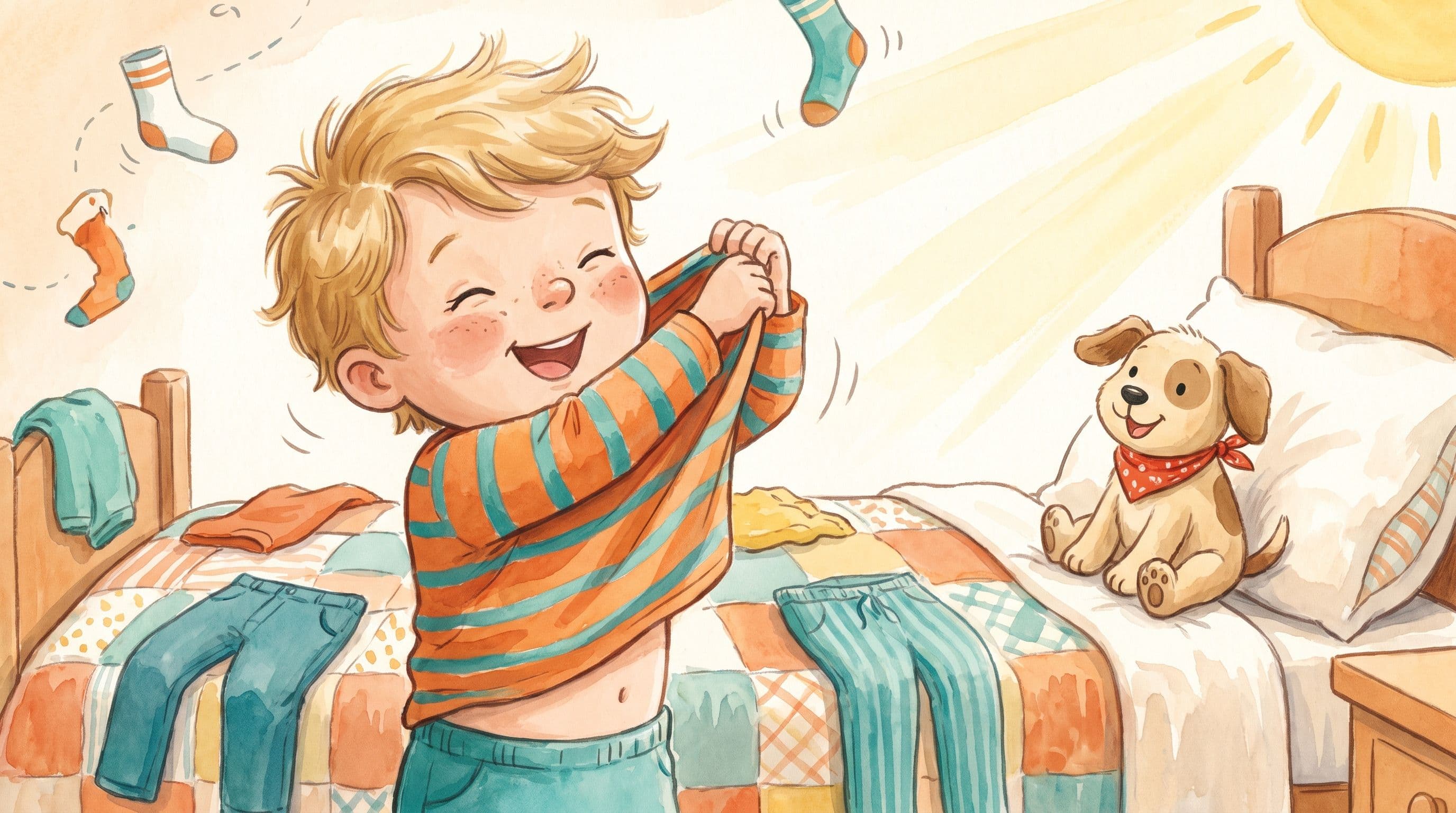
One morning Dad opened a new book with a boy on the cover who had Noah's blond hair and Noah's own name across the top. In the story, that Noah got stuck too, until his stuffed puppy Waffles taught him the trick: find the tag, put it at your back, arms in like a letter T, then push your head through last. Waffles cheered every step, even the wobbly ones.
4. He tries, and feels proud
Story-Noah followed the steps and it worked. Real Noah lined his clothes up the way the book showed, found the tag, made his T, and pushed through. His head popped out the top and he threw both arms up like he'd won a race. Then he did his pants, one leg at a time, sitting down so he wouldn't topple. Fully dressed, all by himself.
5. He won't stop asking for the book
Noah wanted the book every night and laid his clothes out like the story showed each morning. He taught the T trick to his little cousin. Mornings got calmer, because now getting dressed was something Noah did, proudly, instead of something that happened to him.
How should you use a story like this at home?
- Lay clothes out the night before, in the order they go on.
- Start with the easiest item and let your child own that one first, then add steps.
- Build in a few extra minutes so the morning isn't a race.
- Let backwards shirts and mismatched socks slide. Independence now beats a perfect outfit.
At what age should a child dress themselves?
Readiness varies, so follow your child's pace. Pediatric milestone guidance notes that four- and five-year-olds can typically handle much of their own dressing with only occasional help, managing larger items and zippers while smaller closures are still developing (Developmental Milestones: 4 to 5 Year Olds). Many children start earlier with easy elastic-waist clothes and build up from there.
Keep reading: once the shirt's on, the shoes are next — see how the same approach helps a child learning to tie their shoes.