Story ideas
How do you prepare a child for getting tonsils out or ear tubes?
How to prepare a child for a tonsillectomy or ear tubes with a gentle, honest walkthrough of the whole day so nothing is a surprise, plus a full example story.
The short answer
Walk your child through the whole day step by step in gentle, honest terms, from the cozy gown to the special sleep to waking up with a grown-up and a popsicle nearby, so nothing arrives as a surprise. Bring a comfort object and match every detail to what your medical team tells you. A story where a character just like them goes through the day and wakes up fine takes the fear out of the unknown.
Key takeaways
- These are common, safe, everyday procedures — but a young child doesn't know that.
- The unknowns loom large: the special sleep, the mask, the strange room, the sore throat.
- Walk them through the day step by step so nothing arrives as a surprise.
- A story where your child moves through the day and wakes up safe makes it familiar.
How do you prepare a child for getting tonsils out or ear tubes?
Walk your child through the day step by step, in gentle and honest terms, so nothing is a surprise. For many kids this is a first time at a hospital for a procedure, and the unknowns loom large: the special sleep, the mask, the strange room, the sore throat after. These are common, safe, everyday procedures — but that reassurance only lands when a child can picture the whole day.
Some parents worry that explaining a procedure will scare a child, so they skip the details. Usually the unknown is scarier than the truth, gently told.
Why does a story work when hiding the details doesn't?
A story tells the truth gently and gives the day a shape. When a child watches a hero move through each step and wake up safe, the whole thing becomes a story they already know the ending to. Give the hero your child's name and face and the calm becomes theirs.
What does a good hospital-day story look like?
The names and characters are invented for this example, and every hospital is a little different. In a real personalized book, the hero is your own child, and the details can match what your doctor tells you.
1. A hero with something big to learn
Ivy was going to the hospital to have a small procedure. The doctors would help her, and a grown-up would be with her the whole time, before and after. But Ivy had never done anything like it, and the not-knowing made her tummy flip.
2. A worry she can name
What would the hospital be like? Would it hurt? What was the special sleep? Ivy imagined all sorts of scary things, mostly because she had no idea what to actually expect.
3. A hero who looks just like her
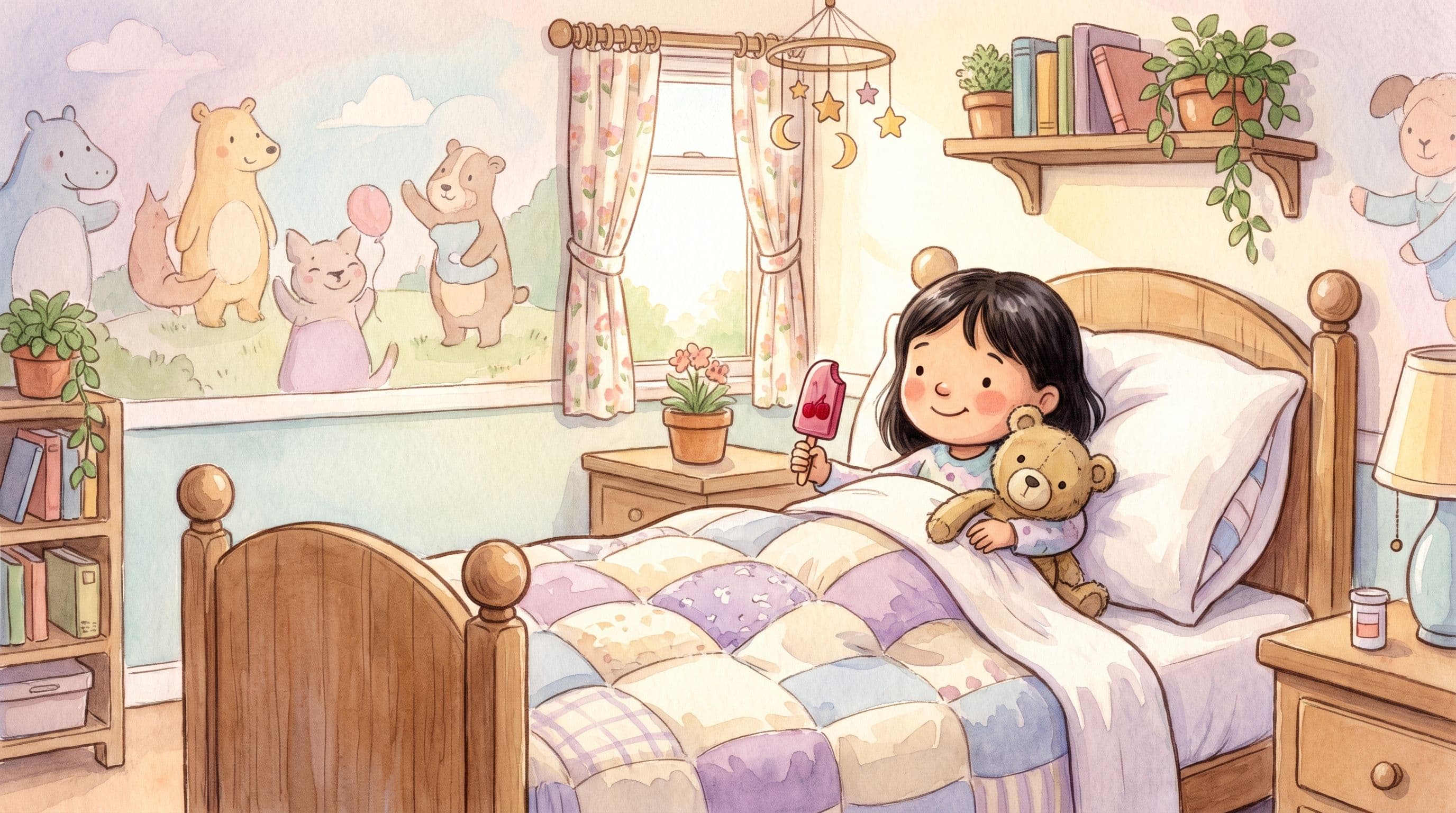
The night before, Mom read her a new book with a girl on the cover who had Ivy's dark hair, a cozy hospital gown, and Ivy's own name across the top. In the story, that Ivy walked through the whole day: putting on a soft gown, meeting the kind nurses and the sleep doctor, breathing into a special mask that gives you a deep, safe sleep so you don't feel anything, then waking up in a cozy room with a grown-up right there and a popsicle for her throat. Her stuffed bear Marlow went with her every step. Nothing was a surprise, because the book told her each part before it happened.
4. She tries, and feels proud
Story-Ivy did her brave hospital day just as the book described, and woke up safe with her grown-up beside her. Real Ivy felt ready because she knew the plan. She wore her gown, met the nurses, hugged her bear, breathed into the mask, and drifted into the special sleep. When she woke up, Mom was right there, just like the story said, with a popsicle waiting. Her throat was sore, but she'd done it. "It happened just like the book," she whispered, proud of her brave hospital day.
5. She won't stop asking for the book
Ivy asked for the book before the day and again while she recovered, because it matched exactly what happened and made her feel calm. She told a nervous friend all about it. The fear had faded, because there were no surprises, just a plan she'd already lived through in a story.
How should you use a story like this at home?
- Match the story to what your medical team actually tells you, since every hospital and procedure differs.
- Be honest in age-appropriate terms. The truth, gently told, beats a scary imagination.
- Bring a comfort object and let your child know a grown-up will be there before and after.
- Lean on your care team and child-life specialists, who prepare kids for procedures every day.
Should you tell a child the details or keep them vague?
For most children, an honest, age-appropriate walkthrough is more reassuring than vagueness, because the unknown tends to be scarier than the truth. The American Academy of Pediatrics reminds parents to follow the fasting and prep instructions the care team gives, to keep their own anxiety in check since children pick up on it, and to expect a child to be sleepy on waking, with the medical team and child-life specialists there to help you find the right words (Preparing Your Child for Anesthesia: What to Expect on the Day of the Procedure).
Keep reading: a hospital day and a shot are both big doctor moments — see how this approach helps a child scared of getting a shot at the doctor.