Story ideas
How do you help a child join a team where they know no one?
How to help a child join a new team by reminding them belonging is built in and giving them simple moves, introduce yourself, be a good teammate, and give it a few practices.
The short answer
Remind your child that a team's whole purpose is to work together, so belonging is built in, and give them a few simple moves: introduce yourself to one person, be a good teammate by cheering others on, and give it a few practices to click. Practice a simple introduction together, arrive early to meet the coach, and reassure them new-team awkwardness fades fast. A story where a character just like them finds their place makes joining feel possible.
Key takeaways
- That first practice can be daunting when everyone already knows each other and the routines.
- Teams are built to bring people together, so belonging is built in.
- Give simple moves: introduce yourself, be a good teammate, give it a few practices.
- A story where your child finds their place makes joining feel possible.
How do you help a child join a team where they know no one?
Remind them that a team's whole purpose is to work together, so belonging is built in, and give them a few simple moves: introduce yourself to one person, be a good teammate, and give it a few practices to click. If your child is joining a team where they know nobody, that first practice can feel intimidating. With a little confidence and a few simple moves, a child can go from nervous newcomer to genuine teammate.
Walking into an established team can make a child feel invisible. A story shows them the way in.
Why does a story work when everyone already knows each other?
A story turns the intimidating group into a set of soon-to-be friends who are all on the same side. When a child watches a hero introduce themselves, cheer a teammate, and gradually feel at home, joining stops feeling impossible. Give the hero your child's name and face and the belonging becomes theirs.
What does a good joining-a-team story look like?
The names and characters are invented for this example. In a real personalized book, the hero is your own child.
1. A hero with something big to try
Bella was joining a new team, and she didn't know a single person on it. She loved the sport, but walking into that first practice, where everyone already had friends and knew the drills, made her stomach flutter.
2. A worry she can name
Would anyone talk to her? Would she be any good? What if she felt like she didn't belong? Being the only new kid on a team of friends made Bella want to hang back at the edge of the field.
3. A hero who looks just like her
The night before her first practice, her dad read her a new book with a girl on the cover who had Bella's dark hair in a team uniform, and Bella's own name across the top. In the story, that Bella joined a team of strangers too, and her stuffed dog Dash gave her the Teammate Plan. Remember, a team's whole job is to work together, so you already belong the moment you join. To settle in, introduce yourself to just one person ("Hi, I'm Bella, I'm new"), be a good teammate by cheering others on, and give it a few practices, teams always feel strange at first and friendly soon after. Story-Bella introduced herself to one girl, cheered during the drills, and by the third practice she felt like part of the team.
4. She tries, and belongs
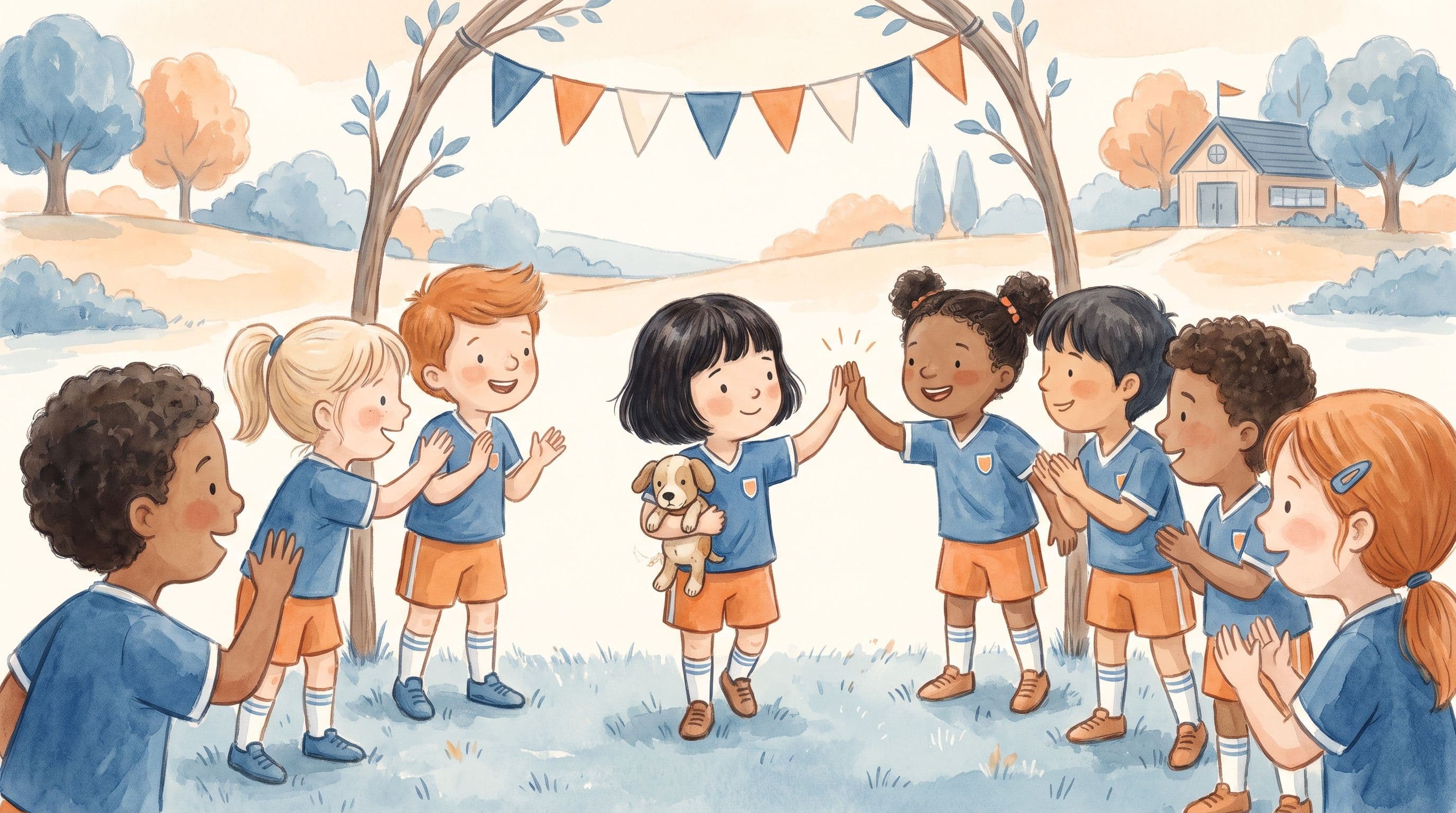
Story-Bella used the Teammate Plan and found her place. Real Bella wanted to try it too. At practice she walked up to one teammate and said, "Hi, I'm Bella, I'm new here." The girl smiled and showed her the warm-up. Bella cheered when a teammate scored, and someone cheered for her too. It felt awkward for about ten minutes and friendly after that. By her third practice, she had teammates who saved her a spot. She belonged.
5. She comes back to the book
Bella asked for the book before practices, and Dash's Teammate Plan became her way in to any new group. Joining stopped being scary, because Bella had learned that a team is built to include you, and a friendly hello plus a few practices is all it takes to belong.
How should you use a story like this at home?
- Remind your child that teams are built to include newcomers.
- Practice a simple introduction together.
- Encourage them to cheer teammates, which builds fast goodwill.
- Set the expectation that it takes a few practices to feel at home.
What helps a child nervous about the first practice?
Practicing an introduction, arriving a little early to meet the coach, and reassuring them that new-team awkwardness fades quickly all help build confidence. The American Academy of Pediatrics notes that team sports offer lasting lessons in teamwork, personal responsibility, and belonging, and that the goal for young players is fun, effort, and personal improvement rather than being the best — which takes the pressure off a nervous newcomer (Sports Goals and Applications for Gradeschoolers).
Keep reading: joining a team is really about making that first connection — see how this approach helps a child making a first friend.