Story ideas
How do you prepare a nervous child for their first school bus ride?
How to calm a child's first-day school-bus nerves by rehearsing the whole ride and giving them one small job, with a full example story.
The short answer
Walk your child through exactly what will happen, step by step, and give them one small job to do when they climb aboard, like finding a friendly seat near the front. Visit the stop ahead of time, send a small comfort object, and say plainly and often that the bus brings them home, since that's usually the real fear. A story where a character just like them rides and comes home safe turns the unknown into something familiar.
Key takeaways
- The bus is big, loud, full of older kids, and drives away from you — a lot of unknowns at once.
- The real fear is usually "will it bring me home?" — answer it plainly and often.
- Rehearse the whole ride and give one small job, like finding a seat near the front.
- A story where your child rides and comes home safe makes the first morning feel familiar.
How do you prepare a nervous child for their first school bus ride?
Walk your child through exactly what will happen and give them one small job to do when they climb aboard. To a small imagination the bus can loom very large: it's big, it's loud, it's full of older kids, and it drives away from home with them inside. That last part is usually the real worry. A first ride goes best when the whole thing has been rehearsed, so the real morning feels like something they've already practiced.
Plain reassurance — "you'll be fine" — doesn't give a nervous child anything to hold onto. A concrete plan does.
Why does a story work when reassurance alone doesn't?
When a child watches a hero find a seat, ride along, and get dropped right back home, the bus stops being a mystery and becomes a route with a beginning, a middle, and a safe ending they can picture. Make the hero share your child's name and face and the rehearsal becomes personal.
What does a good first-bus-ride story look like?
The names and characters are invented for this example. In a real personalized book, the hero is your own child.
1. A hero with something big to learn
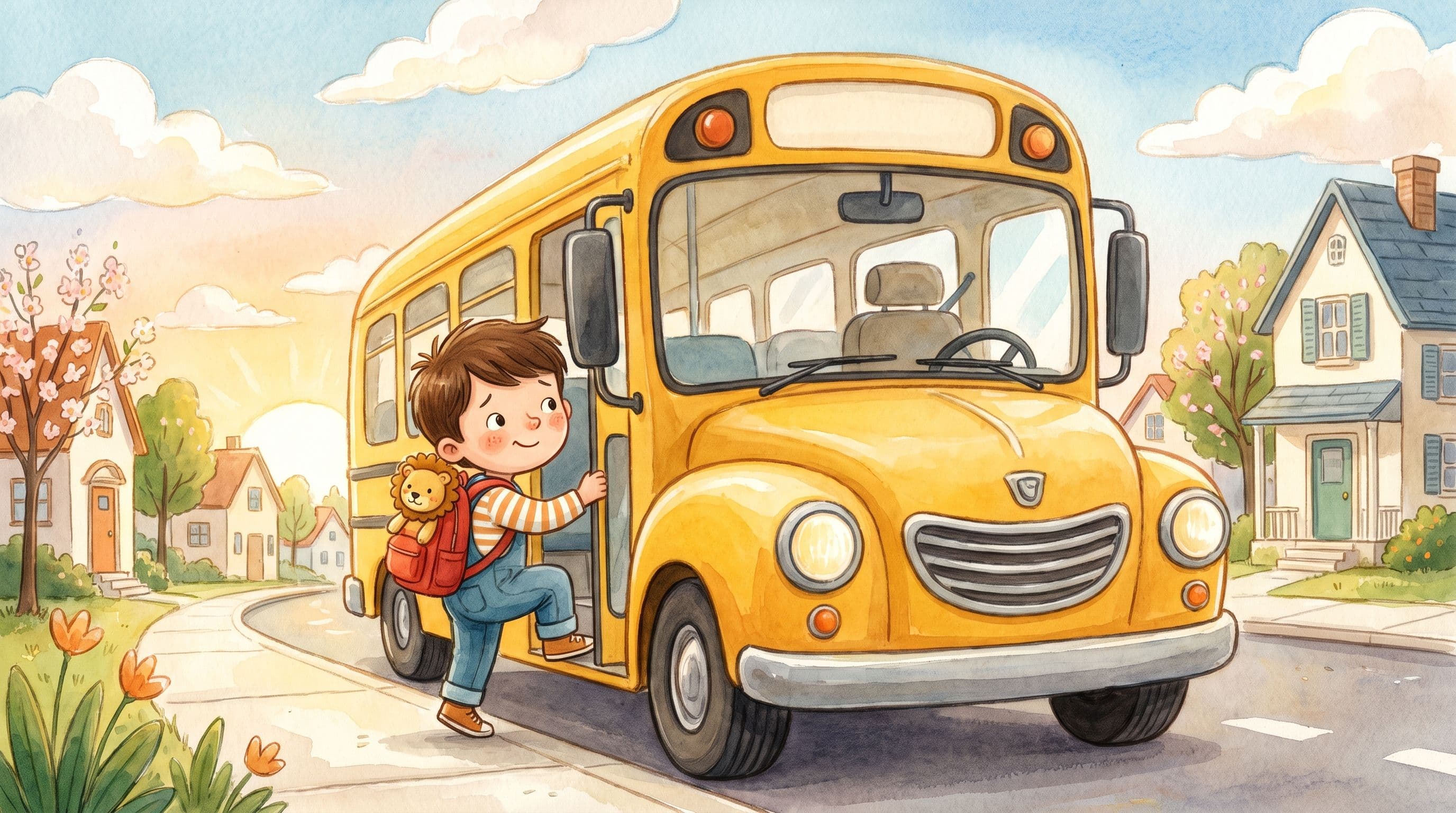
Owen was starting school, and that meant the bus. He liked the idea of it from a distance. Up close, the bus was enormous and full of big kids, and it drove away from his house with him inside. That last part was the tricky one.
2. A worry he can name
What if he sat in the wrong seat? What if he didn't know anyone? What if the bus forgot to bring him home? The night before, Owen's tummy did flips just thinking about that giant yellow bus pulling up without a plan.
3. A hero who looks just like him
That night Dad read him a new book with a boy on the cover who had Owen's brown hair and Owen's own name across the top. In the story, that Owen was nervous too, until his stuffed lion Roary rode along in his backpack for courage and taught him the plan: wave to your grown-up, find a friendly seat near the front, take three lion breaths, and remember that the bus always, always brings you home.
4. He tries, and feels proud
Story-Owen followed the plan, found his seat, rode to school, and got dropped right back home that afternoon, exactly as promised. Real Owen wanted to try it with Roary in his backpack. The next morning he waved to Dad, climbed the big steps, found a seat near the front, and took three lion breaths. The bus rumbled off and, just like the story, it brought him home. "The bus brought me home, just like Roary said."
5. He won't stop asking for the book
Owen asked for the book every night that first week and kept Roary in his backpack for a while. He told the plan to a nervous kid at his stop. The bus stopped being scary, because now it was just his route, with a friendly seat and a promise that it always brings him home.
How should you use a story like this at home?
- Walk the actual route and visit the bus stop before the first day if you can.
- Give a small comfort object and one simple job, like finding a seat near the front.
- State plainly and often that the bus brings them home, since that's usually the real fear.
- Keep goodbyes at the stop short, warm, and confident.
Is it normal to be scared of the school bus?
Yes — the size, the noise, the older kids, and driving away from home are a lot of unknowns for a young child, and rehearsing the ride usually settles the nerves. It's also a good moment to review the safety basics the American Academy of Pediatrics recommends: wait for the bus to fully stop before approaching, stay seated and facing forward during the ride, and stay in view of the driver when crossing (Back-to-School Tips for Families).
Keep reading: the bus is one first-time leap; the pool is another — see how the same approach helps a child scared to put their face in the water.