Story ideas
How do you teach a child to stand up for someone being picked on?
How to raise an upstander by giving a child safe, specific ways to help someone being picked on, including knowing when to get a trusted adult, with a full example story.
The short answer
Give your child safe, specific ways to help, standing next to the person being picked on so they're not alone, using kind calm words, inviting them away to do something fun, and getting a trusted adult when it's serious. Role-play these together, make clear that getting a grown-up is brave, and emphasize helping in ways that keep them safe. A story where a character just like them stands up with courage and kindness makes being brave feel possible.
Key takeaways
- Speaking up when someone is being picked on takes real courage.
- A child may worry about becoming a target themselves.
- Give safe, doable ways to be an "upstander," including knowing when to get an adult.
- A story where your child stands up with courage and kindness makes being brave feel possible.
How do you teach a child to stand up for someone being picked on?
Give them safe ways to help, standing next to the person being picked on, using kind words, inviting them away from the situation, and getting a trusted adult when needed. Helping your child learn to stand up for someone smaller, or anyone being treated unfairly, is one of the most valuable things you can nurture. Giving them safe, doable ways to be an "upstander" helps a child grow into a brave, kind person.
Telling a child to "be kind" or "stand up for others" is abstract. A story makes it concrete and shows it's possible.
Why does a story work to build courage?
A story gives a child both the courage and the how-to for the real moment. When they watch a hero feel the fear, choose to help anyway, and use a safe, specific action, being brave stops feeling impossible. Give the hero your child's name and face and the courage becomes theirs.
What does a good upstander story look like?
The names and characters are invented for this example. In a real personalized book, the hero is your own child.
1. A hero who sees something unfair
At the playground, Nadia saw some bigger kids being unkind to a smaller child, teasing him and not letting him play. It made Nadia's stomach twist. She knew it wasn't fair, but she wasn't sure what to do.
2. A worry she can name
What if the bigger kids turned on her too? What if she said the wrong thing? Speaking up felt scary, so part of Nadia wanted to look away and pretend she hadn't seen. But the twist in her stomach wouldn't go away.
3. A hero who looks just like her
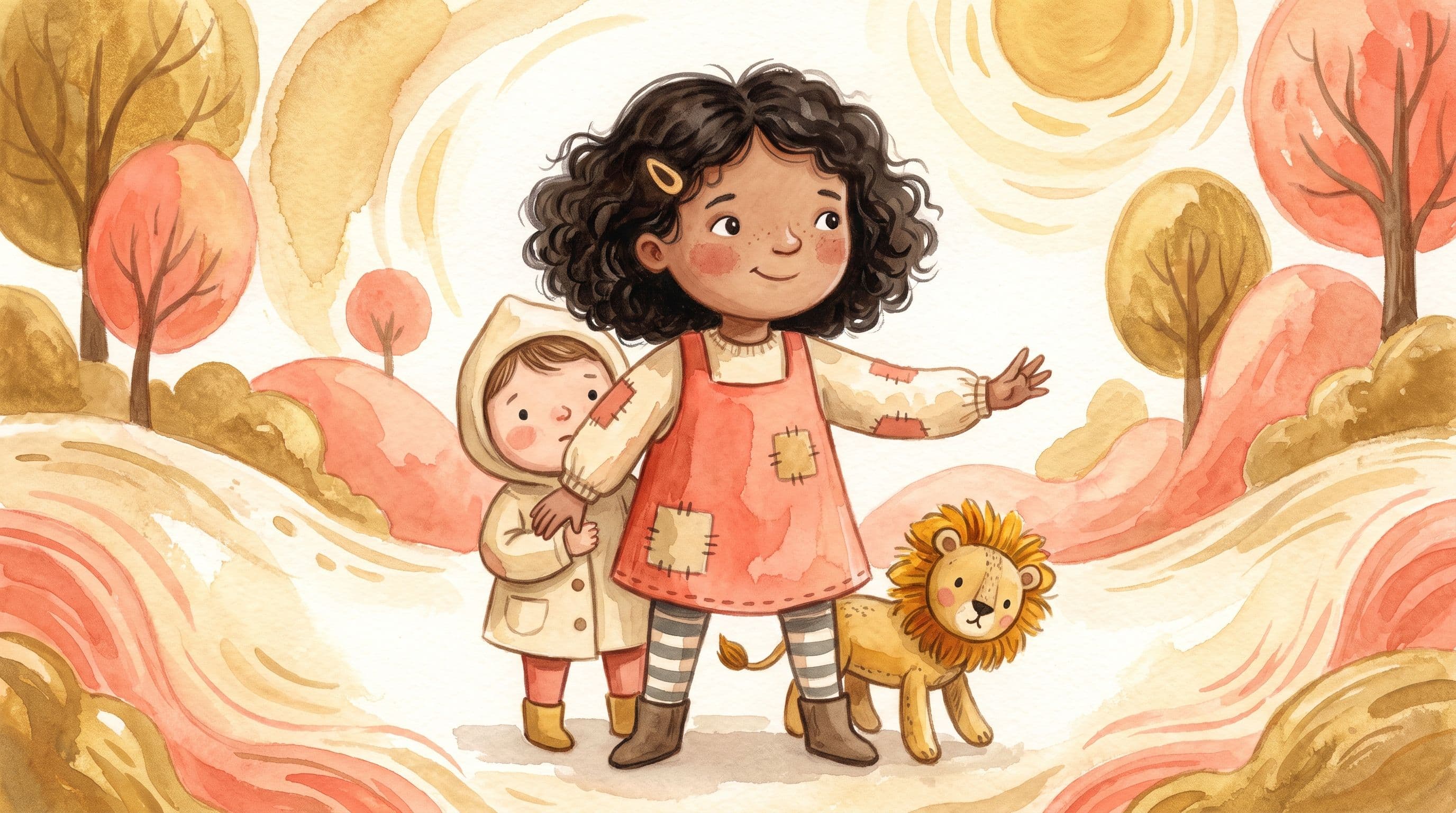
One evening her mom read her a new book with a girl on the cover who had Nadia's dark hair, standing bravely beside a smaller child, and Nadia's own name across the top. In the story, that Nadia saw something unfair too, and her stuffed lion Juno taught her the Upstander moves. You don't have to fight anyone. You can stand next to the kid being picked on so they're not alone. You can use kind, calm words like "That's not nice, let's go play." You can invite them away to do something fun with you. And if it's serious or scary, the bravest, smartest move is to get a trusted grown-up. Story-Nadia stood beside the smaller kid, said "Come play with me," and walked him away to the swings, and a grown-up handled the rest.
4. She tries, and stands tall
Story-Nadia was an upstander and felt proud and brave. Real Nadia wanted to be that brave too. When she saw the smaller child being teased, she felt the fear, took a breath, and walked over. "Come play with me," she said, and stood beside him. They went off to the swings together, and Nadia told a nearby grown-up what was happening. The little kid smiled at her, grateful. Nadia had stood tall, and it felt wonderful.
5. She comes back to the book
Nadia asked for the book again and again, and Juno's Upstander moves became part of who she was. She grew braver and kinder, because she'd learned that standing up for someone doesn't mean being fearless, it means helping even when you're scared, in safe and smart ways.
How should you use a story like this at home?
- Teach specific upstander actions, and role-play them together.
- Make clear that getting a trusted adult is a brave and smart choice, not tattling.
- Praise kindness and courage when you see it.
- Emphasize safety, so your child helps in ways that don't put them at risk.
How do you keep a child safe when they step in to help?
Emphasize safe ways to help and that getting a trusted adult is often the bravest, smartest move, especially in serious situations, so standing up never means putting themselves in danger. The American Academy of Pediatrics notes that bystanders play a powerful role and that children should be taught to safely support the child being targeted and to tell a trusted adult, since adult help is key to stopping bullying (Why Bullying Hurts All Children—and What Parents Can Do About It).
Keep reading: standing up for others and getting help when you're the one hurting are two sides of the same courage — see how this approach helps a child who's being bullied.