Story ideas
How do you help a child feel good about starting speech therapy?
How to help a child feel proud of speech therapy by framing it as fun practice with a friendly coach and celebrating small wins, with a full example story.
The short answer
Frame speech therapy as fun practice with a friendly coach who helps your child's mouth learn new tricks, and celebrate every small win. Talk about it as coaching rather than a problem, normalize that everyone practices something, and practice the suggested sounds at home in short, playful bursts. A story where a character just like them practices and gets better makes therapy feel like play and pride.
Key takeaways
- A child pulled out for special practice can wonder if something is wrong with them.
- Speech therapy works best when a child feels proud of their practice, not singled out.
- Frame it as coaching, normalize that everyone practices something, and celebrate small wins.
- A story where your child practices and improves makes therapy feel like play and pride.
How do you help a child feel good about starting speech therapy?
Frame it as fun practice with a friendly coach who helps their mouth learn new tricks, and celebrate the small wins. A child may feel unsure about why they go to a special room to practice talking, or a little frustrated that some sounds are harder for them than for other kids. A little reframing turns therapy into a game they get to be good at.
A child pulled out for special practice can wonder if something is wrong with them. Reframing it as coaching answers that quietly.
Why does a story work when a child feels singled out?
A story turns "special practice" into "getting stronger." When a child watches a hero work with a friendly speech coach, practice a tricky sound, and nail it, therapy becomes a place where they build a skill worth having. Give the hero your child's name and face and the pride becomes theirs.
What does a good speech-therapy story look like?
The names and characters are invented for this example. In a real personalized book, the hero is your own child.
1. A hero with something big to learn
Layla was starting speech therapy to help her with some sounds that were tricky for her mouth to make. She wasn't sure why she went to a special room with a special teacher, and sometimes it was frustrating when a sound wouldn't come out right.
2. A worry she can name
Why did she have to practice talking when other kids didn't? What if she couldn't get the sound right? Feeling different about it sometimes made Layla want to give up before she started.
3. A hero who looks just like her
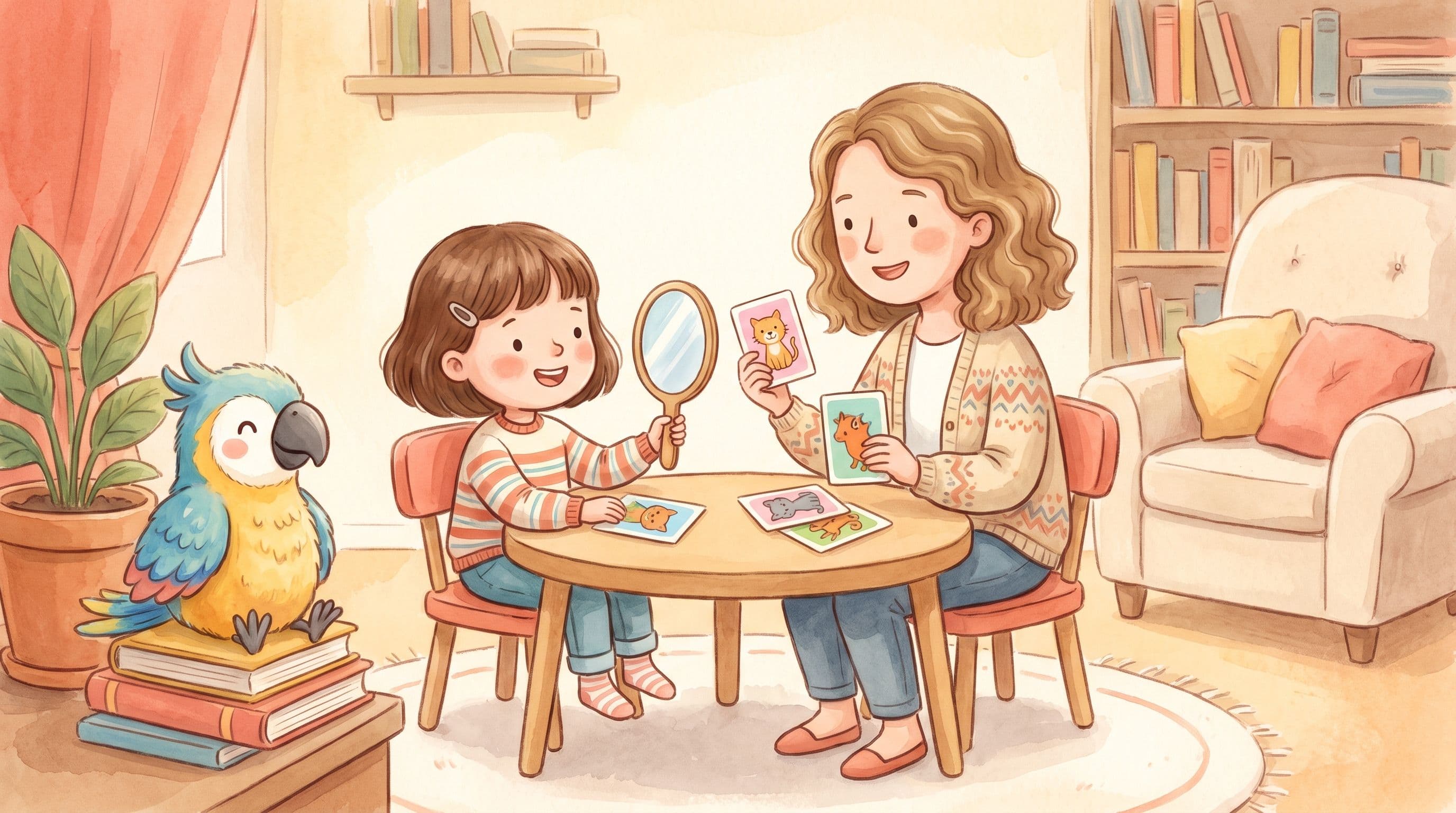
One evening her mom read her a new book with a girl on the cover who had Layla's brown hair, a big smile, and Layla's own name across the top. In the story, that Layla went to speech therapy too, and her stuffed parrot Pip, who loved practicing sounds, called her speech teacher the Sound Coach. The Sound Coach helped her mouth learn new tricks with games, mirrors, and silly practice words, and every time Layla got a little closer, they celebrated. Pip reminded her that everyone practices something, and practice is how you get good at anything.
4. She tries, and feels proud
Story-Layla practiced her tricky sound with the Sound Coach and Pip until one day it came out just right. Real Layla wanted to practice like that too. At her next session she played the sound games, watched her mouth in the mirror, and kept trying. When her tricky sound finally clicked, she beamed. "I did it! I made the sound!" She practiced it all the way home, proud of every try.
5. She won't stop asking for the book
Layla asked for the book before her sessions and started calling her therapist her Sound Coach. She practiced her sounds like a game at home. Speech therapy stopped feeling like something was wrong and started feeling like practice she was getting good at, one proud sound at a time.
How should you use a story like this at home?
- Talk about speech therapy as practice with a helpful coach, not as a problem.
- Celebrate effort and small improvements, not just perfect sounds.
- Practice the sounds your therapist suggests at home, in short, playful bursts.
- Partner with your speech-language pathologist, who can tailor practice to your child.
Will my child feel singled out going to speech therapy?
They might at first, which is why framing it as coaching and normalizing that everyone practices something helps. It's also worth knowing the value of the support: the American Academy of Pediatrics notes that while some speech delays resolve with a little extra help at home, others benefit from a trained speech-language therapist, and encourages parents to ask their child's doctor for a referral when they have concerns (Language Delays in Toddlers: Information for Parents).
Keep reading: speech therapy and hearing aids both help a child connect and communicate — see how this approach helps a child getting hearing aids.