Story ideas
How do you encourage a child to tell the truth after a lie?
How to encourage honesty after a child fibs by making the truth feel safe, praising the courage of coming clean, and showing that honesty brings relief and trust, with a story.
The short answer
Make telling the truth feel safe: stay calm, praise the courage it takes to come clean, and show your child that honesty brings relief and trust rather than just punishment. Separate the honesty, which you praise, from the mistake, which you address gently, and model honesty yourself by admitting your own small slip-ups. A story where a character just like them tells the truth after a lie and feels lighter makes honesty feel worth it.
Key takeaways
- Fibbing is a normal part of development, often about avoiding trouble or testing limits.
- What matters is helping a child understand why honesty matters.
- Make it safe to tell the truth, even after a lie, and praise the courage of coming clean.
- A story where your child tells the truth and feels lighter makes honesty feel worth it.
How do you encourage a child to tell the truth after a lie?
Make telling the truth feel safe: praise the courage it takes to come clean, keep calm, and show that honesty brings relief and trust. When your child tells a lie, what matters is making it safe to tell the truth even after a fib. A child who learns that coming clean brings relief, not just punishment, grows into an honest, trustworthy person.
Lecturing a child about lying can make them hide the truth even more. A story teaches through experience.
Why does a story work better than a lecture?
A story teaches through experience rather than a lecture. When a child watches a hero carry the heavy feeling of a lie, tell the truth, and feel the relief and warmth that follow, they learn that honesty is the braver, better-feeling choice. Give the hero your child's name and face and the honesty becomes theirs.
What does a good honesty story look like?
The names and characters are invented for this example. In a real personalized book, the hero is your own child.
1. A hero who made a mistake
Simone broke something by accident, and when her grown-up asked what happened, she got scared and said she didn't do it. It was a fib. And the moment it was out of her mouth, a heavy, uncomfortable feeling settled in her tummy.
2. A worry she can name
The lie sat inside Simone like a rock. She wanted to take it back but was scared of getting in trouble, so she kept it in, and it just got heavier. The fib was making her feel worse than the accident ever had.
3. A hero who looks just like her
One evening her mom read her a new book with a girl on the cover who had Simone's curly hair, telling the truth to a kind parent, and Simone's own name across the top. In the story, that Simone told a lie too, and carried the same heavy rock. Her stuffed dog Sunny told her a secret: telling the truth is like setting down a heavy backpack, it feels so much lighter afterward. Sunny explained that it takes real courage to come clean, and that grown-ups are far prouder of an honest truth than upset about a mistake. Story-Simone gathered her bravery, told her grown-up the truth, and the grown-up gave her a warm hug and thanked her for being honest. The heavy rock disappeared.
4. She tries, and feels lighter
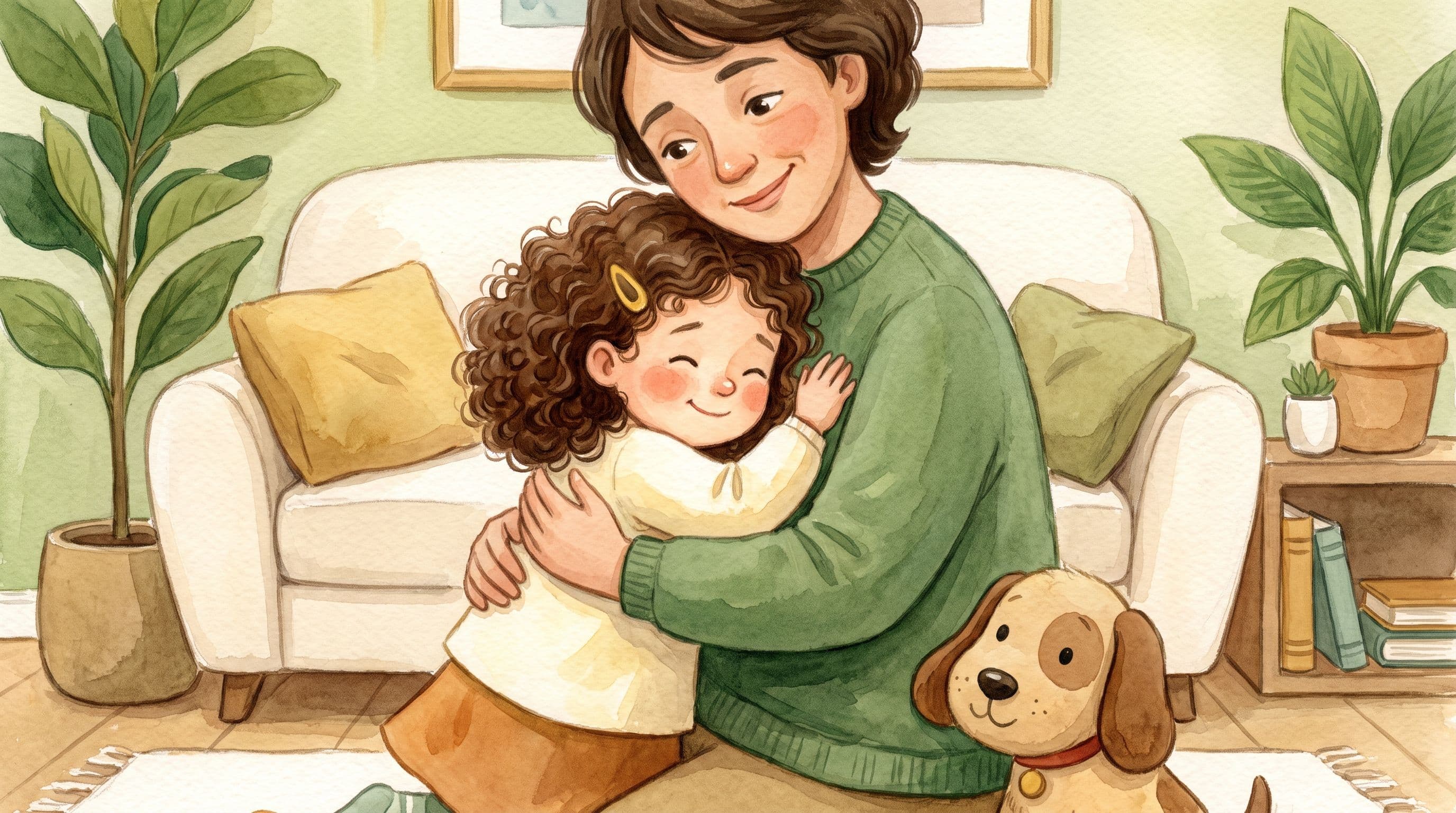
Story-Simone told the truth and felt the relief. Real Simone wanted to set down her own heavy rock. She went to her mom, took a shaky breath, and said, "I have to tell you the truth. I broke it. I'm sorry I said I didn't." Her mom hugged her and said, "Thank you for telling me. That was really brave." The rock lifted right off Simone's chest. Telling the truth had felt scary for a second and wonderful right after.
5. She comes back to the book
Simone asked for the book again, and Sunny's backpack secret stuck with her. She got braver about telling the truth, because she'd learned that honesty sets down the heavy feeling, and that the grown-ups who love her are proudest of all when she's brave enough to be honest.
How should you use a story like this at home?
- Make it safe to tell the truth by staying calm and praising honesty.
- Acknowledge the courage it takes to come clean.
- Separate the honesty (praise it) from the mistake (address it gently).
- Model honesty yourself, including admitting your own small mistakes.
Is lying normal for young children?
Yes — fibbing is a normal part of development, often about avoiding trouble or testing limits, and making honesty safe and rewarded helps it grow. The American Academy of Pediatrics suggests responding to a lie calmly rather than harshly, praising your child when they do tell the truth, avoiding labeling them a "liar," and modeling honesty yourself, since children learn truthfulness best when telling the truth feels safe and valued (When Children Lie: What Parents Can Do).
Keep reading: telling the truth and giving a real apology take the same courage — see how this approach helps a child own a mistake and make it right.