Story ideas
How do you get a picky eater to try new foods?
How to help a picky eater try new foods by lowering the stakes to one no-pressure bite they can always spit out, with a full example story.
The short answer
Lower the stakes to one no-pressure bite your child is always allowed to spit out, keep portions small next to foods they already like, and stay neutral about the result. Pressure backfires because it turns food into a fight about control. Offer new foods many times, since it can take a lot of tries before one is accepted. A story where a character just like them takes one brave bite makes that first taste feel possible.
Key takeaways
- Refusal is usually about the unknown, not taste — they say no before tasting.
- Lower the stakes to one bite they can always spit out and never have to finish.
- Stay neutral about the result, and keep offering the food over time.
- A story where your child takes one brave bite makes the first taste feel possible.
How do you get a picky eater to try new foods?
Lower the stakes to one no-pressure bite your child is always allowed to spit out. Picky eating is incredibly common and usually has nothing to do with taste, because they haven't tasted it. A new food is a new texture, a new smell, a new risk, and for a cautious kid, "no" feels a lot safer than "maybe."
Pressure only makes it worse. The more a child is pushed to eat something, the more they dig in, because now it's a fight about control rather than food. Remove the pressure and hand back the choice, and the new food shrinks from a threat to a maybe.
Why does a story work when pressure doesn't?
A story lets a child rehearse the brave part with none of the stakes. When they watch a hero take one small bite and survive it, the food stops looking dangerous. Give the hero your child's name and face and they start rooting for their own brave bite.
What does a good "one brave bite" story look like?
The names and characters are invented for this example. In a real personalized book, the hero is your own child.
1. A hero with something big to learn
Lucas knew exactly what he liked: pasta, crackers, and cheese in that order. Anything green, lumpy, or new got the same answer before it reached the table. "No thank you, I hate it." He hadn't tried it. He just knew.
2. A worry he can name
New foods felt risky. What if it was mushy? What if it tasted bad and he was stuck with it? Saying no kept everything safe and predictable, so Lucas said no to just about everything, and mealtimes got a little smaller and tenser.
3. A hero who looks just like him
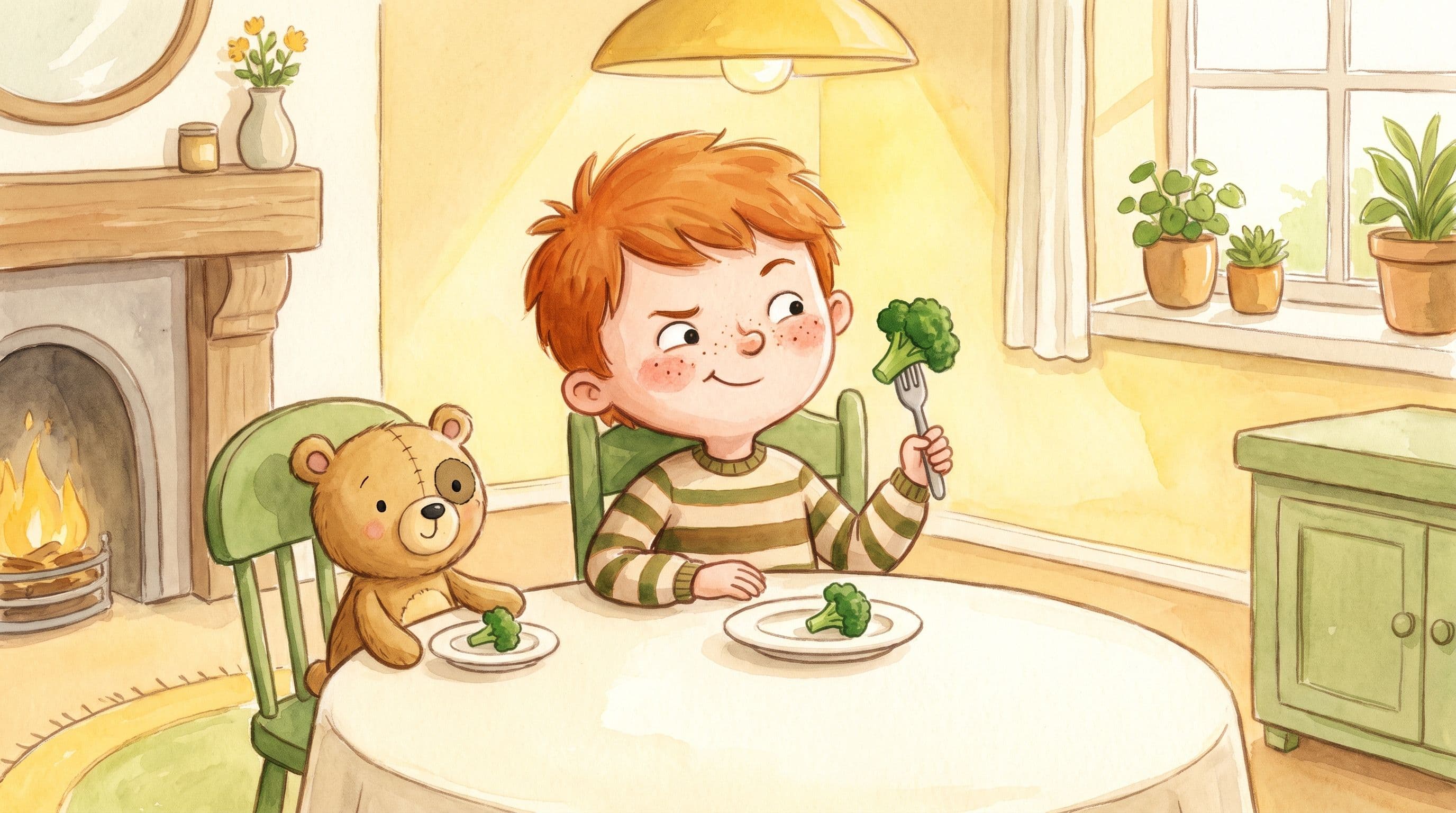
One dinner, Dad brought out a new book with a boy on the cover who had Lucas's red hair and Lucas's own name across the top. In the story, that Lucas said no to everything too, until his stuffed bear Barnaby, a picky eater himself, showed him the One Brave Bite rule: you only have to try one small bite, you're always allowed to spit it out, and you never have to finish. One bite, no trap.
4. He tries, and feels proud
Story-Lucas took one brave bite of something green while Barnaby cheered, and discovered it was, surprisingly, okay. Real Lucas wanted to try it. Dad put one small piece on his fork and promised he could spit it out. Lucas closed his eyes, took the bite, and chewed. "It's actually kind of good," he admitted, shocked at himself. He took a second bite because he wanted to, not because anyone asked.
5. He won't stop asking for the book
Lucas asked for the book at dinner and started doing One Brave Bite with all sorts of new foods. Some he liked, some he didn't, and that was fine, because the rule kept him safe either way. Mealtimes got bigger and calmer, one brave bite at a time.
How should you use a story like this at home?
- Serve one new food next to foods your child already likes, in a small, non-threatening portion.
- Keep the rule sacred: one bite, always allowed to spit it out, never forced to finish.
- Stay neutral about the result — no big praise, no disappointment, just a calm "you tried it."
- Offer new foods many times, without pressure.
Why won't my child try new foods?
For most kids it's caution about the unknown rather than actual taste, since they usually refuse before tasting. That's also why patience matters: the American Academy of Pediatrics notes it can take a child 15 to 20 tries to accept a new food, so continuing to offer it calmly over time is more effective than pushing at any single meal (10 Tips for Parents of Picky Eaters). One low-pressure bite at a time is how those tries add up.
Keep reading: brave bites and clean teeth go hand in hand — see how the same approach ends the nightly toothbrushing fight.