Story ideas
How do you help a child who is afraid of the ocean and waves?
How to help a child who's afraid of the ocean and waves by meeting the water at the edge and turning little waves into a game, with a full example story.
The short answer
Meet the water at the very edge, hold a hand, and turn the little ankle-deep waves into a jumping game, letting your child set the pace and go only as far as they want. Never carry a scared child into deeper water, and keep true water safety front and center. A story where a character just like them plays with the small waves makes the whole ocean feel friendlier.
Key takeaways
- The ocean is big, loud, and always moving, and the waves come whether you're ready or not.
- The way in is at the edge, in ankle-deep water, one little wave at a time.
- Carrying a scared child into the waves removes the control they need to feel safe.
- A story where your child plays with the small waves makes the ocean feel friendly.
How do you help a child who is afraid of the ocean and waves?
Meet the water at the very edge, hold a hand, and turn the little waves into a game. The ocean is genuinely big, loud, and always moving, and the waves arrive whether a child is ready or not. That's a lot for a small person. The way in is almost always at the edge, in ankle-deep water, jumping one little wave at a time.
Carrying a scared child into the waves usually backfires, because it takes away the one thing they need most: control over how close they get. Give that control back and the ocean gets an on-ramp.
Why does a story work when carrying them in doesn't?
A story restores control by showing it. When a child watches a hero start at the edge and jump the little waves with a grown-up's hand, the ocean stops being a wall of water and becomes a game they can join at their own pace. Give the hero your child's name and face and the beach becomes theirs.
What does a good ocean story look like?
The names and characters are invented for this example. In a real personalized book, the hero is your own child.
1. A hero with something big to learn
Maya loved the sand — the buckets, the castles, the shells. What she did not love was the water. The waves were tall and loud and never stopped coming, and she kept her distance from the whole roaring edge of the sea.
2. A worry she can name
The ocean was so big, and the waves came at her whether she wanted them to or not. She couldn't tell how far they'd reach or how strong they'd be, and that unpredictability kept her planted safely up by the towels.
3. A hero who looks just like her
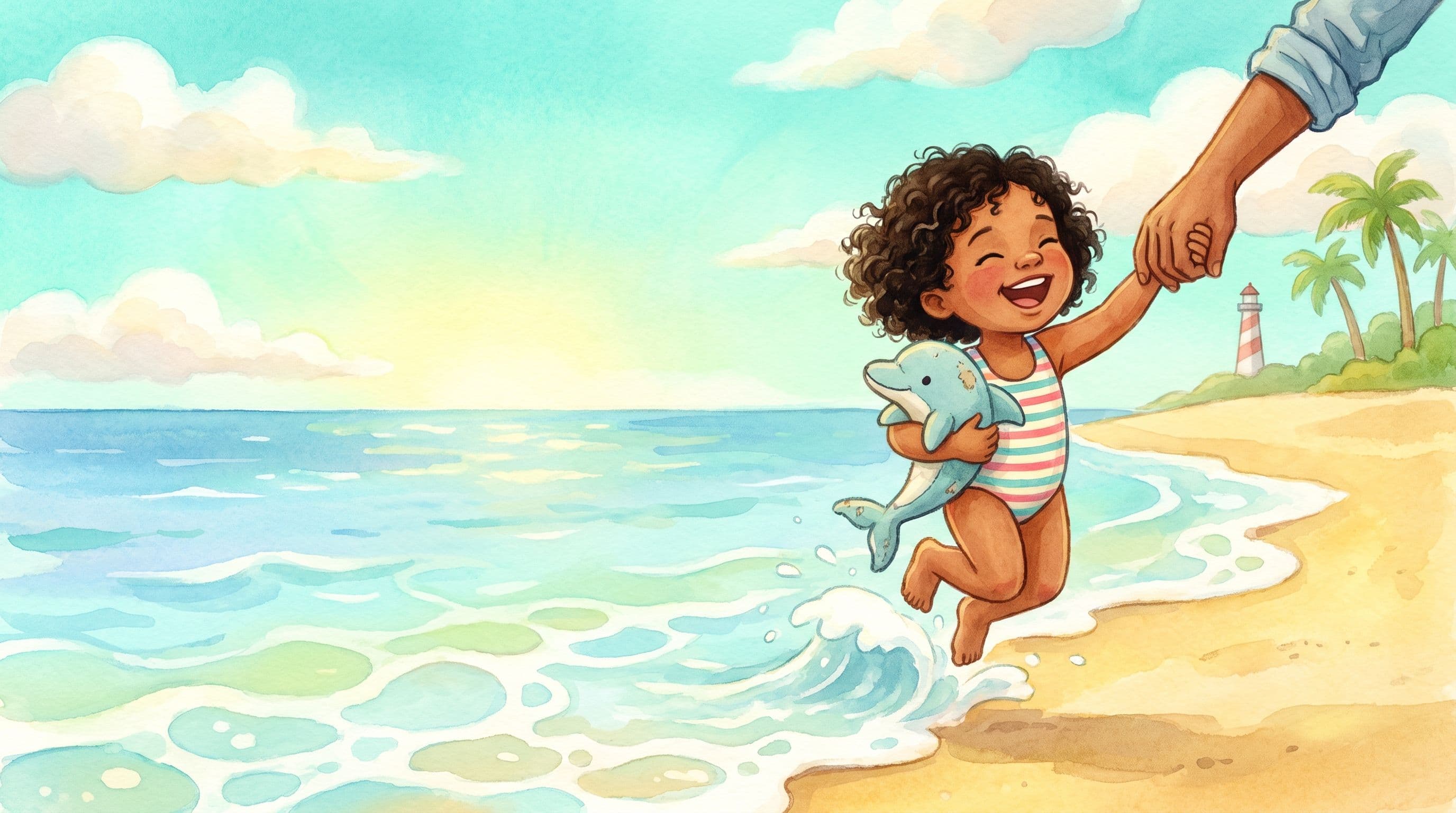
The night before a beach day, Mom read her a new book with a girl on the cover who had Maya's dark hair and Maya's own name across the top. In the story, that Maya was scared of the ocean too, until her stuffed dolphin Finn taught her the trick. You don't start with the big waves. You start at the very edge, where the water is only as deep as your ankles, you hold a grown-up's hand, and you turn the little waves into a jumping game: here comes one, jump, splash, giggle. Only the small waves, only as far as you want.
4. She tries, and feels proud
Story-Maya jumped the little edge-waves and laughed, and the ocean felt like a friend instead of a threat. Real Maya wanted to play Finn's game. At the beach she held Mom's hand, stood in the ankle-deep water, and waited. "Here comes one!" Jump, splash, giggle. She jumped wave after little wave, staying exactly as close as she wanted, and had the time of her life.
5. She won't stop asking for the book
Maya asked for the book before every beach trip and taught the little-wave jumping game to her cousins. She still respected the big water, but she loved the edge of the ocean now, because she'd found a way in that let her stay in charge the whole time.
How should you use a story like this at home?
- Always start at the very edge and let your child choose how deep to go.
- Hold a hand and make the little waves a game rather than a test.
- Never carry a scared child into deeper water. Let them lead.
- Keep true water safety front and center, since ocean respect and supervision always matter.
Why is my child afraid of the ocean?
The ocean is big, loud, and constantly moving, and the waves are unpredictable, which makes it one of the more common outdoor fears; starting small at the edge usually helps. Whatever your child's comfort level, the American Academy of Pediatrics stresses that water competence is only one layer of protection and never a substitute for constant, close adult supervision and appropriate safety gear around any water (Swim Lessons for Children: When to Start & What to Consider).
Keep reading: ocean fear and pool nerves are cousins — see how this approach helps a child scared to put their face in the water.