Story ideas
How do you support a child learning English as a new language?
How to support a child learning English by celebrating their home language as a strength, treating mistakes as brave practice, and cheering every new word, with a story.
The short answer
Celebrate your child's home language as a superpower they keep and stay proud of, treat English mistakes as brave practice rather than something to be embarrassed about, and cheer every new word and small win. Show them a smile, a gesture, and a few words are enough to start, and partner with their teachers and school language-support programs. A story where a character just like them grows braver and more fluent, without giving up their first language, builds real confidence.
Key takeaways
- Spending all day surrounded by words you don't fully understand takes enormous courage.
- A child's home language is a strength, not something to leave behind.
- Treat mistakes as brave practice, and cheer every new word.
- A story where your child grows braver and stays bilingual builds real confidence.
How do you support a child learning English as a new language?
Celebrate their home language as a superpower, treat mistakes as brave practice, and cheer every new word. If your child is learning English, school can feel overwhelming in a way that's easy to underestimate — wanting to join in but not yet having the words. A child who knows their home language is a strength, that mistakes are part of learning, and that they grow braver every day, can meet that challenge with confidence.
Learning in a new language can make a bright child feel small and silent. A story reminds them of their strength.
Why does a story work during a language leap?
A story reminds a child of their strength and turns the leap into an adventure. When they watch a hero use gestures and a few words, make mistakes without shame, and slowly grow more fluent, the language leap becomes something they're brave enough for, and their first language stays a source of pride. Give the hero your child's name and face and the courage becomes theirs.
What does a good learning-English story look like?
The names and characters are invented for this example. In a real personalized book, the hero is your own child.
1. A hero with something big to face
Andrés was learning English at his new school. At home, his family spoke the language he'd always known, and he loved it. At school, everything was in English, and he was still learning the words, which made the days feel big and sometimes lonely.
2. A worry he can name
He had so much to say, but not yet the English words to say it. What if he said something wrong? What if the other kids couldn't understand him? Sometimes it felt easier to stay quiet than to try.
3. A hero who looks just like him
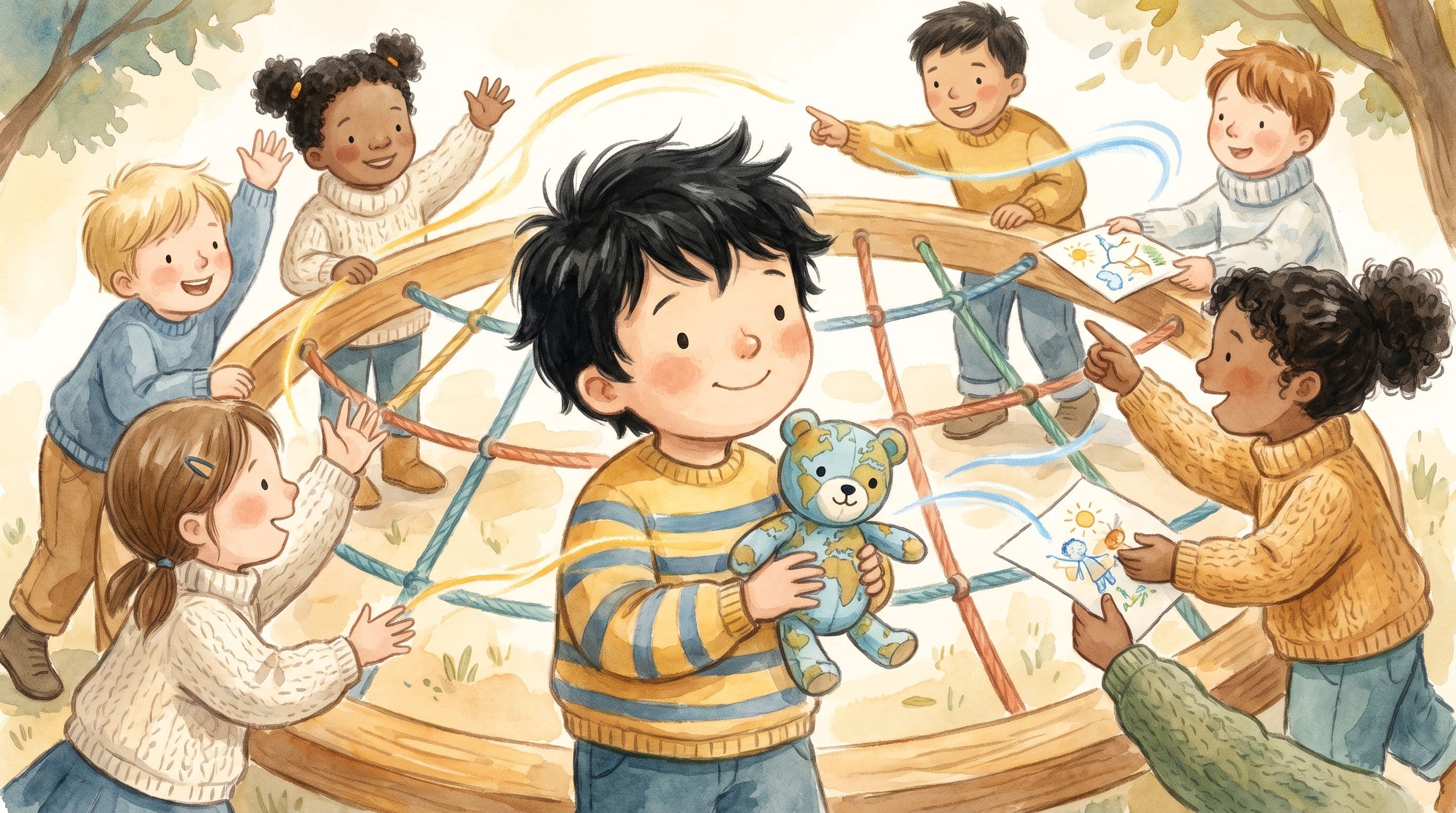
One evening his family read him a new book, in both languages, with a boy on the cover who had Andrés's black hair, smiling with new friends, and Andrés's own name across the top. In the story, that Andrés was learning English too, and his stuffed bear Atlas, who had traveled the whole world, told him two powerful things. First, knowing more than one language is a superpower, most kids only speak one, and his first language would always be his to keep and be proud of. Second, every new word is a brave step, and mistakes are just practice. Atlas showed him that a smile, a gesture, and a few words are enough to start, and that his English would grow a little every single day.
4. He tries, and grows braver
Story-Andrés used the words he had, added new ones daily, and made friends who loved that he was bilingual. Real Andrés wanted to be that brave too. He started using the English words he knew, pointing and smiling to fill the gaps, and trying new words even when they came out imperfect. His classmates thought it was cool that he spoke two languages, and they helped him learn. Week by week, his words grew, and so did his confidence, without ever letting go of his first language.
5. He comes back to the book
Andrés asked for the book in both languages, and Atlas's two truths stayed with him. The days got less lonely and more exciting, because Andrés had learned that being bilingual made him special, mistakes made him braver, and every new word was a victory to be proud of.
How should you use a story like this at home?
- Celebrate your home language and keep speaking it proudly.
- Treat English mistakes as brave practice, never something to be embarrassed about.
- Cheer every new word and small win.
- Partner with your child's teachers and any language-support programs at school.
Will learning English mean a child loses their home language?
No — keeping your home language strong at home supports your child's overall learning and identity, and children can grow in English while keeping their first language. The American Academy of Pediatrics notes that developmental milestones are the same no matter how many languages a child is exposed to, and that being multilingual brings real cognitive and social advantages, so there's no need to drop the home language to make room for English (Young Children Learning Multiple Languages: Parent FAQs).
Keep reading: a new language and a new school both mean walking in brave — see how this approach helps a child starting a new school mid-year.