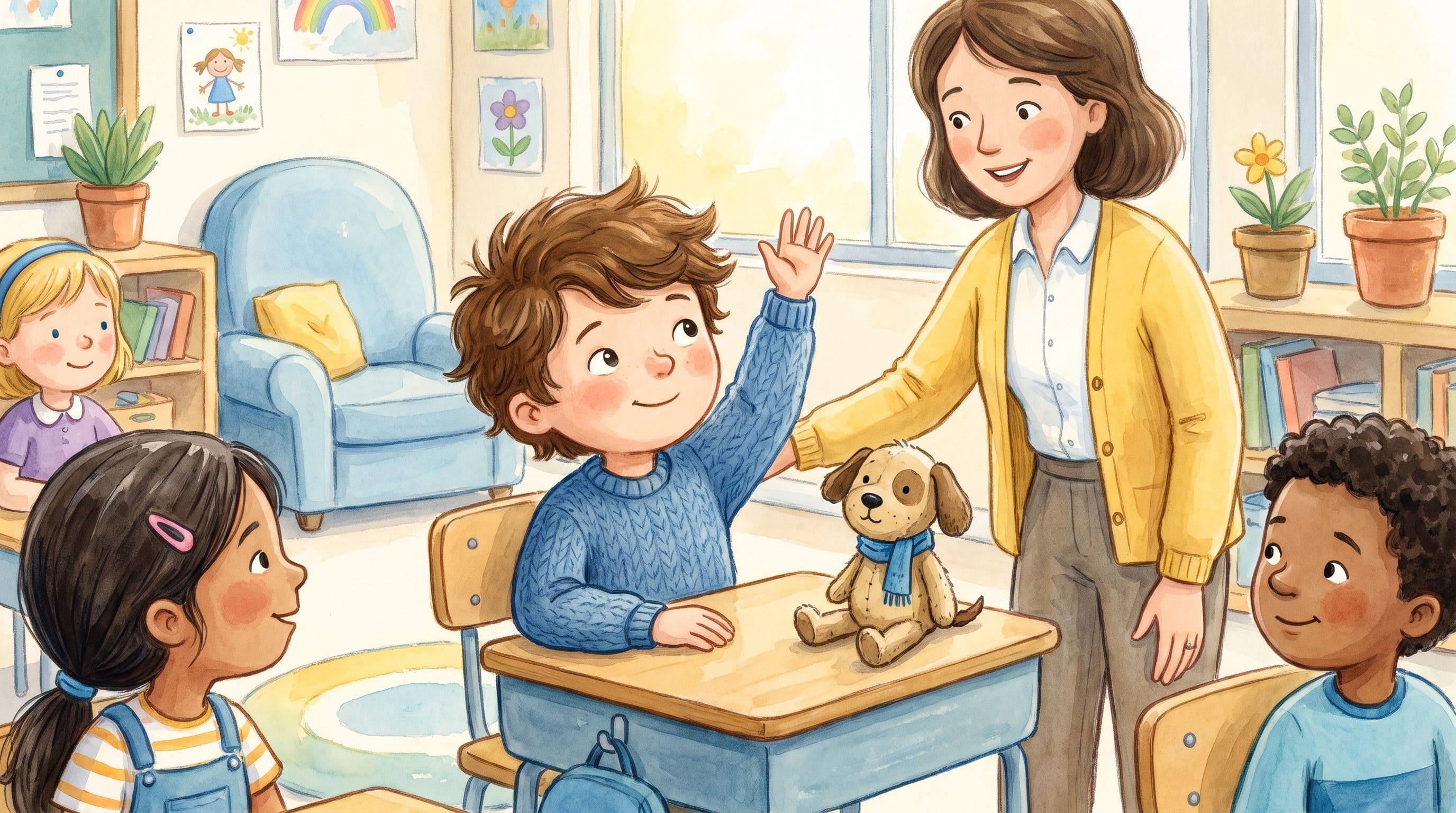
Story ideas
How do you prepare a child for moving up to middle school?
How to prepare a child for middle school by walking through the new routines, lockers, changing classes, and a schedule, and reminding them how much they've already handled.
The short answer
Walk through the new routines, changing classes, lockers, and a schedule, so they feel familiar rather than frightening, and remind your child how much they've already handled. Tour the school and walk the halls beforehand if you can, practice a locker combination, read through a sample schedule, and normalize that getting a little lost the first week is expected. A story where a character just like them navigates middle school and thrives makes the jump feel doable.
Key takeaways
- Middle school is one of the bigger jumps in school life: a new building, changing classes, lockers.
- It's exciting and genuinely nerve-wracking, all at once.
- Walk through the new routines and remind your child how capable they already are.
- A story where your child navigates middle school and thrives makes the jump feel doable.
How do you prepare a child for moving up to middle school?
Walk through the new routines, changing classes, lockers, a schedule, so they feel familiar, and remind them how much they've already handled. If your child is moving up to middle school, they're facing a new, larger building, multiple teachers, lockers, and a whole new social landscape. Walking them through what to expect turns the unknown into something they can stride into ready.
Middle school comes with a pile of new logistics and social unknowns all at once. A story lets a child rehearse the whole thing.
Why does a story work for this big jump?
A story breaks the giant leap into a series of manageable, familiar steps. When a child watches a hero find their locker, get to class on time, and handle the newness, they remember they've conquered new things before. Give the hero your child's name and face and the readiness becomes theirs.
What does a good middle-school story look like?
The names and characters are invented for this example. In a real personalized book, the hero is your own child.
1. A hero with a big jump ahead
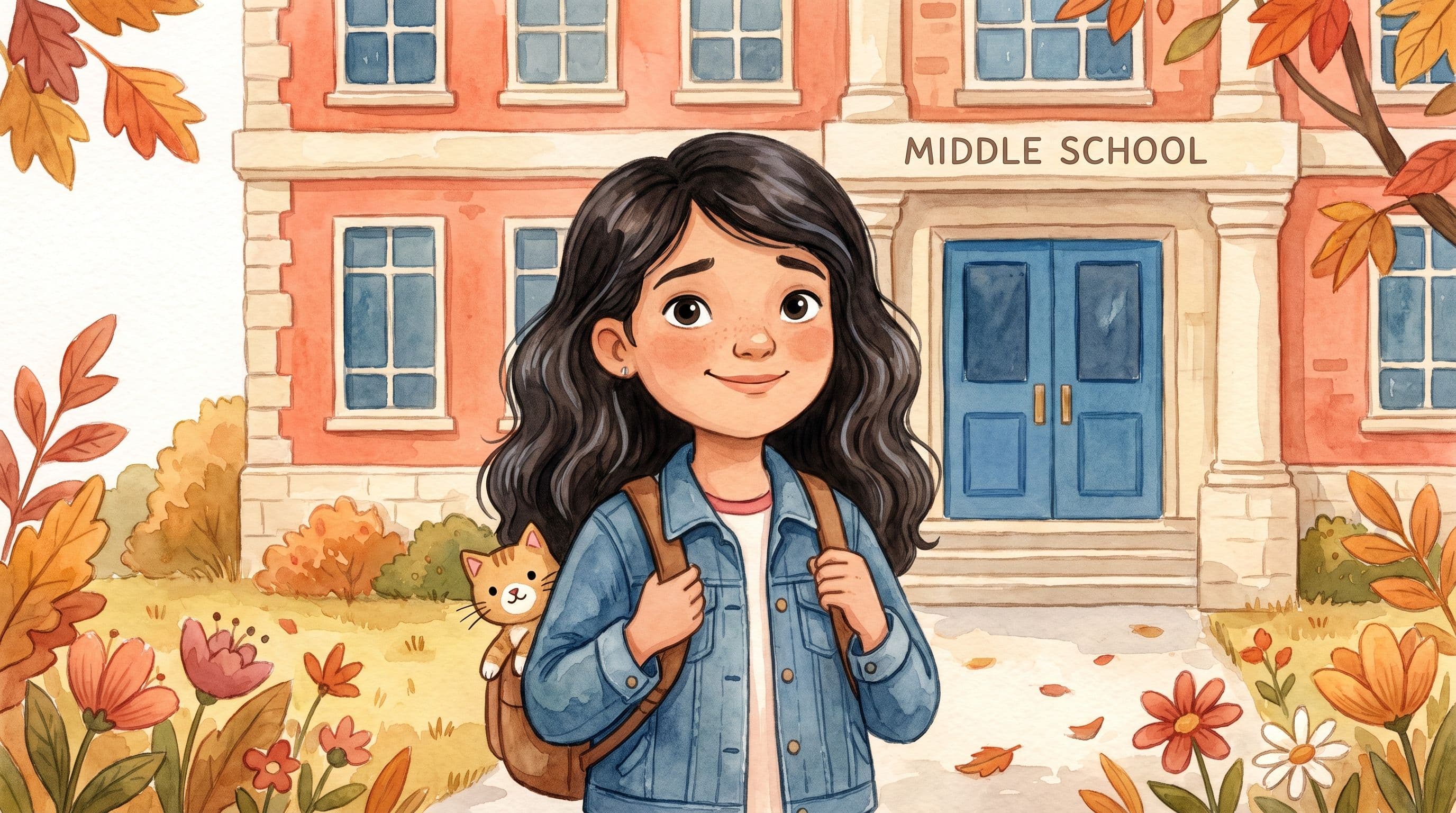
Jade was moving up to middle school. It was bigger than her old school, with lockers, a class schedule, and different teachers for every subject. Part of her felt excited to be a big kid. Part of her felt a swarm of butterflies.
2. A worry she can name
What if she couldn't open her locker? What if she got lost between classes or ran out of time? What if the whole thing was just too much? The pile of new unknowns made the summer before feel heavy.
3. A hero who looks just like her
One evening her mom read her a new book with a girl on the cover who had Jade's dark hair and a backpack, standing tall in front of a middle school, and Jade's own name across the top. In the story, that Jade was starting middle school too, and her stuffed cat Jinx walked her through it. Lockers have a simple combination you practice until it's easy. A schedule is just a map of your day, and you can carry it until you know it. Getting a little lost the first week is normal, everyone does, and teachers expect it and help. And here's the big one, Jinx said: remember all the new, scary things you've already conquered? You've got this too.
4. She tries, and feels ready
Story-Jade practiced her locker, followed her schedule, asked for help when she got turned around, and settled in just fine. Real Jade wanted to feel ready too. She practiced a pretend locker combination, looked at a sample schedule, and reminded herself of all the firsts she'd already handled. On the first day, she found her locker, made it to class, got a little lost once and asked a teacher who kindly pointed the way. By the end of the week, middle school felt like hers. "I've got this," she said, and she did.
5. She comes back to the book
Jade asked for the book all summer and into that first week, and Jinx's walkthrough made the jump feel doable. The nerves settled into excitement, because Jade had learned that middle school was just a series of new things to figure out, and figuring out new things was something she was already good at.
How should you use a story like this at home?
- Tour the school and walk the halls before the first day if you can.
- Practice a locker combination and read through a sample schedule together.
- Normalize that getting lost early is expected and teachers will help.
- Remind your child of all the new challenges they've already handled.
What helps a child anxious about the jump to middle school?
Familiarity reduces anxiety, so previewing the logistics and social changes helps, as does reminding them of past successes. The American Academy of Pediatrics notes that kids who struggle with the transition often believe intelligence can't change, while those who value effort adjust more easily — so it helps to praise effort, reinforce the message "you can do hard things," and stay connected with the school and teachers to catch concerns early (Helping Your Teen Succeed in School).
Keep reading: every big school jump starts with one brave first day — see how this approach helps a child on their first day of school.