Story ideas
Why is my child afraid of the dentist, and what actually helps?
Why dental fear happens, what the ADA and AAP recommend before a visit, and a simple script and story approach that helps a child through the chair.
The short answer
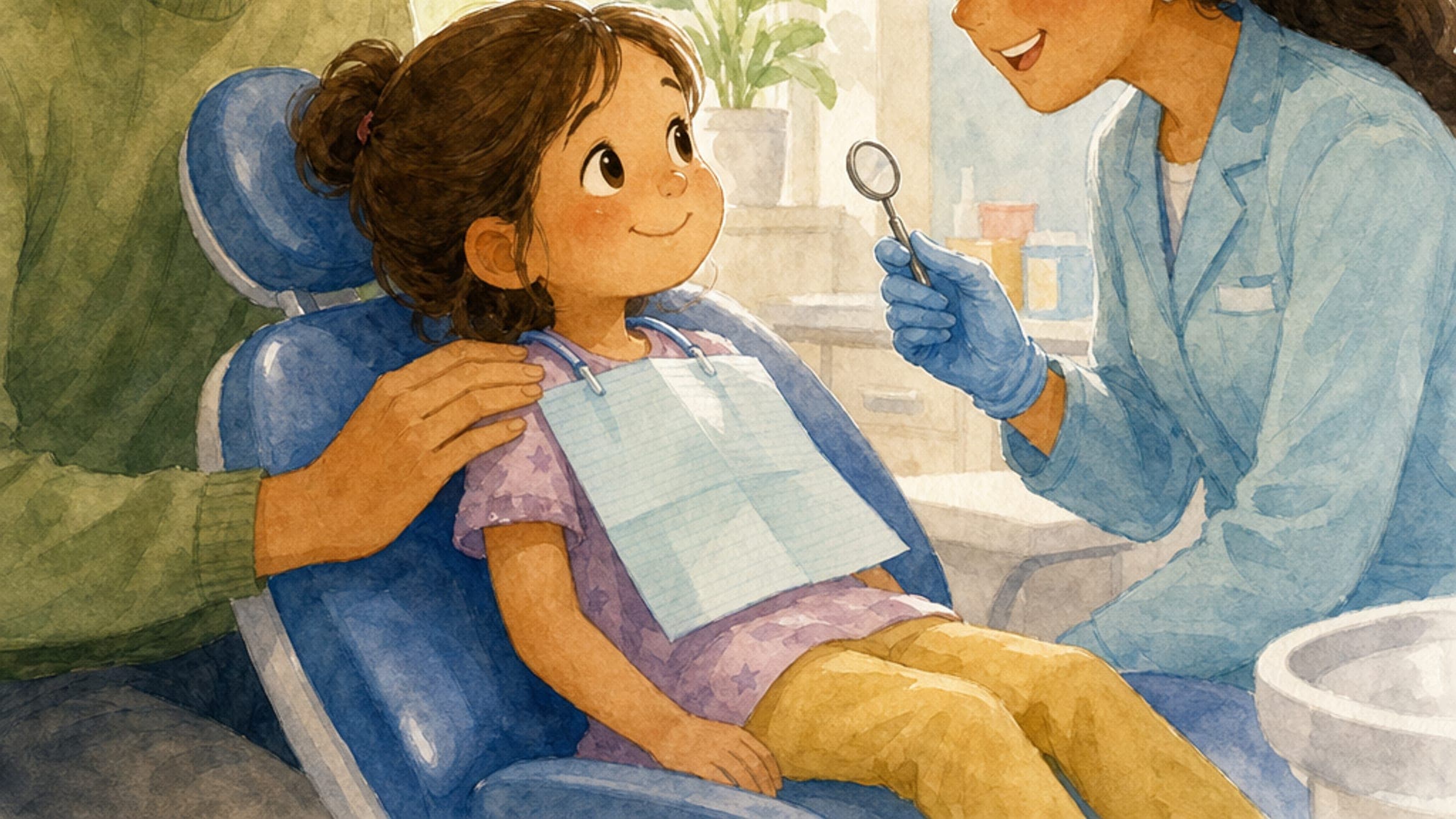
Most dental fear comes from the unknown, not real pain. The American Dental Association recommends a first visit by age one, preparing your child with calm language, mouth-opening practice at home, and books about the visit beforehand. Skip words like "hurt," "shot," and "drill." Give your child a small job in the chair, like counting or holding a stuffed animal. A personalized story that previews those same steps makes the real visit feel familiar instead of frightening.
Key takeaways
- Dental fear is usually fear of the unknown, not the actual exam.
- The ADA recommends a first visit by age one, before problems start.
- Neutral words work better than reassurance: skip "hurt," "shot," and "drill."
- A specific job in the chair, like counting or squeezing a hand, gives your child something to do besides worry.
- Walking through the visit in a personalized story beforehand makes the real one feel familiar.
Why is my child afraid of the dentist?
Because almost everything about the visit is new: a reclining chair, bright light, strange tools, and a stranger looking in their mouth. Kids fill that gap with imagination, and imagination usually invents something worse than a routine exam. The fear is rarely about pain. It's about not knowing what happens next.
Waiting makes it worse. A visit that's days away can sit in a child's mind and grow. The fix isn't to avoid mentioning it. It's to fill in the unknown with specifics before the appointment, so there's nothing left to imagine.
What should you do before the visit?
The American Dental Association recommends scheduling that first visit after the first tooth appears and no later than the first birthday, and offers a short list of ways to make it go smoothly: talk to your child ahead of time and stay positive, have them practice opening their mouth at home, and read books or watch videos about a dental visit so the room feels less foreign (First Dental Visit for Baby). Book the appointment for a time your child is rested and fed, not during a normal nap window, and frame it as a happy errand rather than something to get through.
The American Academy of Pediatrics recommends establishing a dental home by your child's first birthday or within six months of the first tooth, so a dentist can catch problems early and your child grows up with checkups as routine instead of a rare, unfamiliar event (Good Oral Health Starts Early). Starting early, before there's ever been a bad experience, is a large part of why early visits tend to go easier than a first visit that happens later, after a cavity or a scare.
What should you say, and avoid saying?
Skip "it won't hurt," "shot," "drill," and "hurt." Even a well-meant "it won't hurt" tells a child that hurting was on the table, which plants the exact worry you're trying to avoid. Plain, neutral words work better: "the dentist counts your teeth," "the chair goes back like a rocket seat," "the light helps them see."
Avoid describing your own bad dental memories where your child can hear them. Kids read tone before they read words, and a parent's dread is contagious.
Give your child one concrete job for the chair: count the ceiling tiles, hold a stuffed animal, or squeeze your hand three times when they're ready for the next step. A job turns "sit still and be scared" into something they can actually do.
What does a good dental-visit story look like?
A personalized story works the same way advance preparation does, just with more detail and a familiar face. Put your child in the waiting room, the chair, and the moment the light clicks on, so none of it is new when the real day comes. Let the character in the story get nervous, use their one job, and be surprised by how short the exam actually is. Naming the exact steps out loud, in a story your child already knows, does more to lower the fear than a single pep talk in the car on the way there.
Keep the story honest. The chair reclines, the light is bright, the dentist counts teeth with a small mirror, and sometimes there's a little polishing. None of that needs to be dressed up as more exciting than it is; it just needs to be familiar.
If daily brushing is also a struggle, the same honesty-plus-plan approach helps — see brushing teeth without a fight. And if a loose tooth is coming up around the same time as a checkup, losing the first tooth covers that milestone too.
Keep reading: dental visits and getting a shot at the doctor both come down to the same fix — trade the unknown for a plan.
More related guidance:
- A Worried Brain at Bedtime? A Story for Naming Worries
- Afraid of Bugs and Spiders? A Story That Turns Fear Into Curiosity
- Afraid of Costumed Characters? A Story That Helps Your Child Say Hi
- Afraid of Dogs? A Story That Helps Your Child Feel Safe Around Them
- Personalized Story Ideas Hidden in Everyday Family Moments